
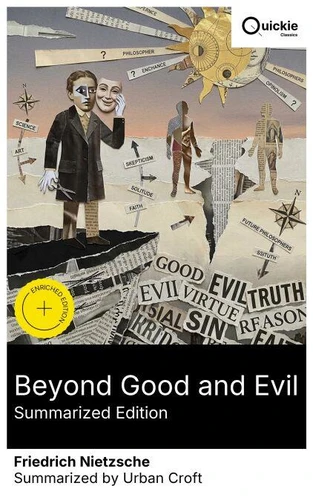
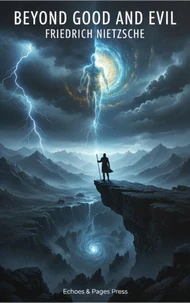
Beyond Good and Evil (Summarized Edition). Enriched edition. Aphorisms on Will to Power, Master-Slave Morality, Perspectivism, and the Free Spirit against Christian Morality
Par : , ,Formats :
Disponible dans votre compte client Decitre ou Furet du Nord dès validation de votre commande. Le format ePub est :
- Compatible avec une lecture sur My Vivlio (smartphone, tablette, ordinateur)
- Compatible avec une lecture sur liseuses Vivlio
- Pour les liseuses autres que Vivlio, vous devez utiliser le logiciel Adobe Digital Edition. Non compatible avec la lecture sur les liseuses Kindle, Remarkable et Sony
 , qui est-ce ?
Notre partenaire de plateforme de lecture numérique où vous retrouverez l'ensemble de vos ebooks gratuitement
Pour en savoir plus sur nos ebooks, consultez notre aide en ligne ici
C'est si simple ! Lisez votre ebook avec l'app Vivlio sur votre tablette, mobile ou ordinateur :

- Nombre de pages103
- FormatePub
- ISBN859-65--4787551-2
- EAN8596547875512
- Date de parution12/01/2026
- Protection num.Digital Watermarking
- Taille892 Ko
- Infos supplémentairesepub
- ÉditeurQUICKIE CLASSICS
Résumé
Beyond Good and Evil condenses Nietzsche's mature assault on moral and metaphysical certitudes into taut aphorisms and brief polemics. Unmasking the "prejudices of philosophers, " he shows how truth-claims cloak instincts and the will to power, advances perspectivism, and sketches free spirits and future philosophers who think beyond binary morals. Its quick, ironic, diagnostician's style situates the book at the pivot of late nineteenth-century thought, confronting positivism, German idealism, and the legacy of Christian conscience.
A former Basel philologist, Nietzsche wrote amid illness, solitude, and itinerant years in the Alps and Italy, conditions that honed his ear for nuance and his suspicion of moral rhetoric. After Thus Spoke Zarathustra (1883-1885) and a break with Wagner, he pursued a cooler, more analytic register to prepare a revaluation of inherited values. Recommended to readers of philosophy, literature, and religious studies, this demanding volume clarifies debates about truth, agency, and morality while unsettling habitual certainties.
Read with patience and a pencil: its barbed insights, audacious hypotheses, and exacting portraits of thinkers can reorient a curriculum and a life of thought. Quickie Classics summarizes timeless works with precision, preserving the author's voice and keeping the prose clear, fast, and readable-distilled, never diluted. Enriched Edition extras: Introduction · Synopsis · Historical Context · Author Biography · Brief Analysis · 4 Reflection Q&As · Editorial Footnotes.
A former Basel philologist, Nietzsche wrote amid illness, solitude, and itinerant years in the Alps and Italy, conditions that honed his ear for nuance and his suspicion of moral rhetoric. After Thus Spoke Zarathustra (1883-1885) and a break with Wagner, he pursued a cooler, more analytic register to prepare a revaluation of inherited values. Recommended to readers of philosophy, literature, and religious studies, this demanding volume clarifies debates about truth, agency, and morality while unsettling habitual certainties.
Read with patience and a pencil: its barbed insights, audacious hypotheses, and exacting portraits of thinkers can reorient a curriculum and a life of thought. Quickie Classics summarizes timeless works with precision, preserving the author's voice and keeping the prose clear, fast, and readable-distilled, never diluted. Enriched Edition extras: Introduction · Synopsis · Historical Context · Author Biography · Brief Analysis · 4 Reflection Q&As · Editorial Footnotes.
A propos de Friedrich Nietzsche

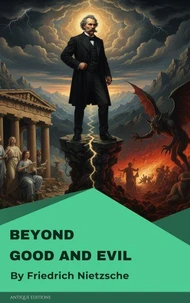
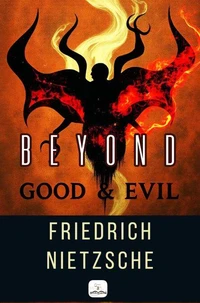
Beyond Good and Evil
E-book
0,99 €
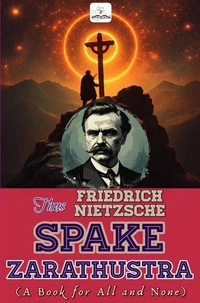
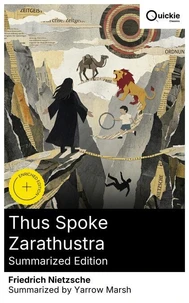
Thus Spoke Zarathustra
E-book
0,49 €
4,99 €
4,99 €
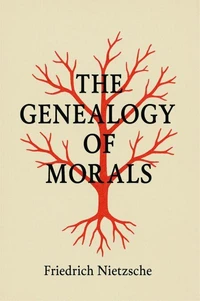
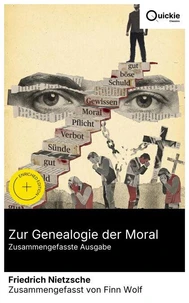
The Genealogy Of Morals
E-book
8,99 €