
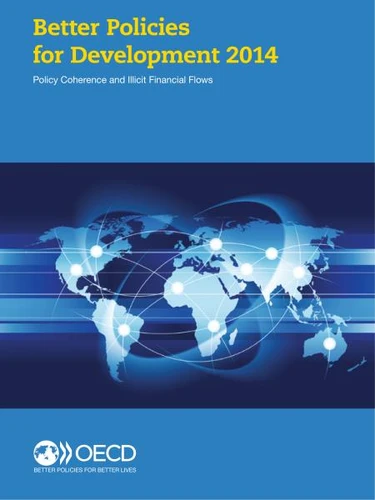
Better policies for development 2014. Policy coherence and illicit financial flows
Par :Formats :
Disponible dans votre compte client Decitre ou Furet du Nord dès validation de votre commande. Le format PDF est :
- Compatible avec une lecture sur My Vivlio (smartphone, tablette, ordinateur)
- Compatible avec une lecture sur liseuses Vivlio
- Pour les liseuses autres que Vivlio, vous devez utiliser le logiciel Adobe Digital Edition. Non compatible avec la lecture sur les liseuses Kindle, Remarkable et Sony
 , qui est-ce ?
Notre partenaire de plateforme de lecture numérique où vous retrouverez l'ensemble de vos ebooks gratuitement
Pour en savoir plus sur nos ebooks, consultez notre aide en ligne ici
C'est si simple ! Lisez votre ebook avec l'app Vivlio sur votre tablette, mobile ou ordinateur :

- Nombre de pages100
- FormatPDF
- ISBN978-92-64-21032-5
- EAN9789264210325
- Date de parution28/04/2014
- Protection num.Digital Watermarking
- Taille4 Mo
- Infos supplémentairespdf
- ÉditeurOECD
Résumé
This edition of Better Policies for Development focuses on illicit financial flows and their detrimental effects on development and growth. Every year, huge sums of money are transferred out of developing countries illegally. The numbers are disputed, but illicit financial flows are often cited as outstripping official development aid and inward investment. These flows strip resources from developing countries that could be used to finance much-needed public services, such as health care and education.
This report defines policy coherence for development as a global tool for creating enabling environments for development in a post-2015 context. It shows that coherent policies in OECD countries in areas such as tax evasion, anti-bribery and money laundering can contribute to reducing illicit financial flows from developing countries. It also provides an update on OECD efforts to develop a monitoring matrix for policy coherence for development, based upon existing OECD indicators of 'policy effort'.
The report also includes contributions from member states. Most illustrate national processes to deal with policy coherence for development beyond 2015.
This report defines policy coherence for development as a global tool for creating enabling environments for development in a post-2015 context. It shows that coherent policies in OECD countries in areas such as tax evasion, anti-bribery and money laundering can contribute to reducing illicit financial flows from developing countries. It also provides an update on OECD efforts to develop a monitoring matrix for policy coherence for development, based upon existing OECD indicators of 'policy effort'.
The report also includes contributions from member states. Most illustrate national processes to deal with policy coherence for development beyond 2015.
A propos de OCDE


32,99 €

72,99 €

33,99 €

32,99 €
32,99 €

32,00 €

25,00 €

Tax compilance by design
E-book
16,00 €

16,00 €

19,00 €

16,00 €


23,00 €

Women in business 2014
E-book
31,00 €


27,00 €