Paige Howard is an English-language nonfiction author known for writing reflective books on creativity, personal transformation, and the emotional complexities of modern life. Her work blends thoughtful storytelling with grounded psychological insight, exploring how people navigate ambition, uncertainty, and identity in rapidly changing environments. Paige's writing style is intimate yet analytical, creating books that feel both intellectually engaging and quietly comforting, like lantern light drifting through a midnight library.
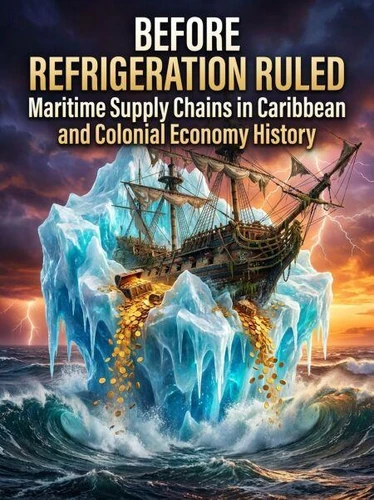
Before Refrigeration Ruled. Maritime Supply Chains in Caribbean and Colonial Economy History
Par :Formats :
Disponible dans votre compte client Decitre ou Furet du Nord dès validation de votre commande. Le format ePub est :
- Compatible avec une lecture sur My Vivlio (smartphone, tablette, ordinateur)
- Compatible avec une lecture sur liseuses Vivlio
- Pour les liseuses autres que Vivlio, vous devez utiliser le logiciel Adobe Digital Edition. Non compatible avec la lecture sur les liseuses Kindle, Remarkable et Sony
 , qui est-ce ?
Notre partenaire de plateforme de lecture numérique où vous retrouverez l'ensemble de vos ebooks gratuitement
Pour en savoir plus sur nos ebooks, consultez notre aide en ligne ici
C'est si simple ! Lisez votre ebook avec l'app Vivlio sur votre tablette, mobile ou ordinateur :

- Nombre de pages206
- FormatePub
- ISBN978-3-565-46556-9
- EAN9783565465569
- Date de parution28/05/2026
- Protection num.pas de protection
- Taille1 Mo
- Infos supplémentairesepub
- ÉditeurEmphaloz Publishing House
Résumé
Long before electric cooling transformed cities, wooden ships carried melting cargo through equatorial waters. The nineteenth century ice business exposed how vulnerable industrial systems could still reshape entire societies.
Frederic Tudor entered a commercial world that considered exporting ice impossible. Yet through relentless experimentation, he established shipping routes linking frozen lakes in Massachusetts to colonial markets in the Caribbean and South Asia.
Business correspondence, insurance records, and warehouse accounts reveal constant instability beneath the industry's public success. Captains miscalculated temperatures, harbor delays destroyed cargoes, and tropical humidity threatened profits at every stage. Still, imported ice altered medicine, dining culture, military hospitals, and elite social life across British colonial territories. The emergence of insulated storage facilities and coordinated port logistics foreshadowed later global refrigeration networks that would redefine food distribution worldwide. The story is not merely about invention, but about the economic imagination required to commercialize something nature could erase before arrival.
Business correspondence, insurance records, and warehouse accounts reveal constant instability beneath the industry's public success. Captains miscalculated temperatures, harbor delays destroyed cargoes, and tropical humidity threatened profits at every stage. Still, imported ice altered medicine, dining culture, military hospitals, and elite social life across British colonial territories. The emergence of insulated storage facilities and coordinated port logistics foreshadowed later global refrigeration networks that would redefine food distribution worldwide. The story is not merely about invention, but about the economic imagination required to commercialize something nature could erase before arrival.