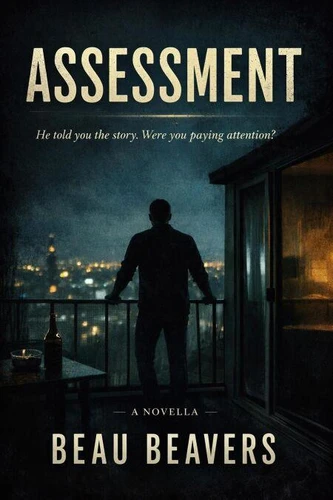
Publisher Synopsis - AssessmentBy Beau BeaversPsychological Thriller / Literary Suspense Assessment is a psychological thriller that explores morality, emotional detachment, and the unsettling space between legality and conscience. Ryan, a bartender living in a shared beachside house, thinks his quiet roommate Caleb is simply awkward and reserved. Caleb follows rigid routines, keeps mostly to himself, and rarely shows emotion.
But after Caleb unexpectedly loses his engineering job, he reveals a disturbing secret from his past involving a violent crime he witnessed as a teenager. What unsettles Ryan most is not just the story itself, but Caleb's complete lack of guilt. Caleb insists he did nothing wrong because he never physically participated and was under no legal obligation to intervene. To him, morality is secondary to technical innocence.
As Ryan and his friend Mark investigate further, they discover Caleb's story is real-and that he became locally infamous as the man who stood by and did nothing. Suddenly, everyday life inside the house begins feeling tense and psychologically unsafe. Caleb remains calm, intelligent, and outwardly normal, but Ryan slowly realizes there is something deeply unsettling beneath his controlled exterior.
The more time Ryan spends around Caleb, the more he begins questioning not only Caleb's morality, but his own willingness to tolerate it. Small interactions take on disturbing meaning as Ryan becomes trapped in a quiet psychological game where Caleb seems less interested in hiding who he is than observing how others react once they know. Blending psychological tension with realistic dialogue and moral ambiguity, Assessment examines complicity, accountability, masculinity, and the human tendency to rationalize disturbing behavior when it arrives wrapped in normalcy.
Rather than relying on violence or shock alone, the novella builds suspense through atmosphere, discomfort, and the growing realization that some of the most dangerous people are not impulsive monsters-but emotionally detached observers who feel nothing at all. At its core, Assessment is a chilling study of character, morality, and the uncomfortable truth that sometimes the greatest test is not whether evil exists, but whether ordinary people are willing to live beside it once they recognize it.
Publisher Synopsis - AssessmentBy Beau BeaversPsychological Thriller / Literary Suspense Assessment is a psychological thriller that explores morality, emotional detachment, and the unsettling space between legality and conscience. Ryan, a bartender living in a shared beachside house, thinks his quiet roommate Caleb is simply awkward and reserved. Caleb follows rigid routines, keeps mostly to himself, and rarely shows emotion.
But after Caleb unexpectedly loses his engineering job, he reveals a disturbing secret from his past involving a violent crime he witnessed as a teenager. What unsettles Ryan most is not just the story itself, but Caleb's complete lack of guilt. Caleb insists he did nothing wrong because he never physically participated and was under no legal obligation to intervene. To him, morality is secondary to technical innocence.
As Ryan and his friend Mark investigate further, they discover Caleb's story is real-and that he became locally infamous as the man who stood by and did nothing. Suddenly, everyday life inside the house begins feeling tense and psychologically unsafe. Caleb remains calm, intelligent, and outwardly normal, but Ryan slowly realizes there is something deeply unsettling beneath his controlled exterior.
The more time Ryan spends around Caleb, the more he begins questioning not only Caleb's morality, but his own willingness to tolerate it. Small interactions take on disturbing meaning as Ryan becomes trapped in a quiet psychological game where Caleb seems less interested in hiding who he is than observing how others react once they know. Blending psychological tension with realistic dialogue and moral ambiguity, Assessment examines complicity, accountability, masculinity, and the human tendency to rationalize disturbing behavior when it arrives wrapped in normalcy.
Rather than relying on violence or shock alone, the novella builds suspense through atmosphere, discomfort, and the growing realization that some of the most dangerous people are not impulsive monsters-but emotionally detached observers who feel nothing at all. At its core, Assessment is a chilling study of character, morality, and the uncomfortable truth that sometimes the greatest test is not whether evil exists, but whether ordinary people are willing to live beside it once they recognize it.


 , qui est-ce ?