SOLDES
Jusqu'à -70% sur une sélection d'articles*

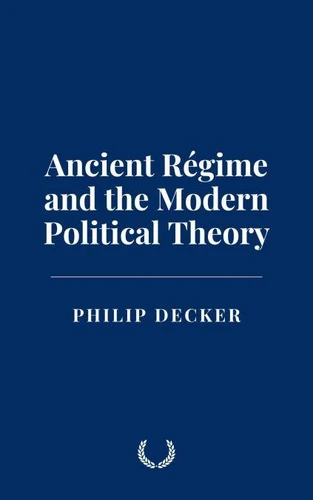
Ancient Régime and the Modern Political Theory
Par :Formats :
Disponible dans votre compte client Decitre ou Furet du Nord dès validation de votre commande. Le format ePub est :
- Compatible avec une lecture sur My Vivlio (smartphone, tablette, ordinateur)
- Compatible avec une lecture sur liseuses Vivlio
- Pour les liseuses autres que Vivlio, vous devez utiliser le logiciel Adobe Digital Edition. Non compatible avec la lecture sur les liseuses Kindle, Remarkable et Sony
 , qui est-ce ?
Notre partenaire de plateforme de lecture numérique où vous retrouverez l'ensemble de vos ebooks gratuitement
Pour en savoir plus sur nos ebooks, consultez notre aide en ligne ici
C'est si simple ! Lisez votre ebook avec l'app Vivlio sur votre tablette, mobile ou ordinateur :

- FormatePub
- ISBN8230980957
- EAN9798230980957
- Date de parution26/01/2025
- Protection num.pas de protection
- Infos supplémentairesepub
- ÉditeurIndependently Published
Résumé
This book explores the evolution of political, economic, and social ideologies from the late medieval period through to the contemporary era, focusing on the major intellectual movements that have shaped the modern world. Beginning with an examination of the Ancien Régime, it delves into the rise of the Enlightenment, the challenges of absolutism, and the emergence of revolutionary movements that sought to overthrow traditional power structures.
The exploration of key figures such as Rousseau, Voltaire, Montesquieu, and their intellectual heirs provides insight into the philosophical underpinnings of modern political theory, with particular attention to the development of concepts like democracy, republicanism, and individual rights. The book traces the influence of these revolutionary ideas on the French and American Revolutions, considering how the principles of liberty, equality, and fraternity were articulated and contested.
It then shifts to the complex legacy of these revolutions, analyzing the rise of figures like Napoleon, the global spread of liberalism, and the critiques of capitalism posed by figures such as Karl Marx. The rise of conservatism and its ideological opposition to the Enlightenment and revolution is examined, followed by an exploration of liberalism and its evolution in response to the challenges of inequality and global change.
In the 20th century, the book addresses the rise of postmodernism, which critiques the assumptions of the Enlightenment and modernism, offering a more fragmented and relativistic view of truth and power. Finally, it analyzes the global ideological landscape of the 21st century, considering the rise of neoliberalism, the return of nationalism, and the persistence of social justice movements. Through a deep analysis of these ideologies, the book illuminates the ongoing struggle for political and ideological hegemony in a rapidly globalizing world, while questioning the possibility of universal principles in the face of cultural and economic diversity.
The exploration of key figures such as Rousseau, Voltaire, Montesquieu, and their intellectual heirs provides insight into the philosophical underpinnings of modern political theory, with particular attention to the development of concepts like democracy, republicanism, and individual rights. The book traces the influence of these revolutionary ideas on the French and American Revolutions, considering how the principles of liberty, equality, and fraternity were articulated and contested.
It then shifts to the complex legacy of these revolutions, analyzing the rise of figures like Napoleon, the global spread of liberalism, and the critiques of capitalism posed by figures such as Karl Marx. The rise of conservatism and its ideological opposition to the Enlightenment and revolution is examined, followed by an exploration of liberalism and its evolution in response to the challenges of inequality and global change.
In the 20th century, the book addresses the rise of postmodernism, which critiques the assumptions of the Enlightenment and modernism, offering a more fragmented and relativistic view of truth and power. Finally, it analyzes the global ideological landscape of the 21st century, considering the rise of neoliberalism, the return of nationalism, and the persistence of social justice movements. Through a deep analysis of these ideologies, the book illuminates the ongoing struggle for political and ideological hegemony in a rapidly globalizing world, while questioning the possibility of universal principles in the face of cultural and economic diversity.
A propos de Philip Decker
2,99 €
2,99 €
2,99 €



2,99 €

2,99 €


2,99 €