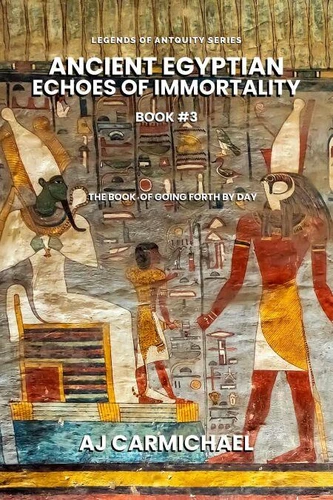
Ancient Egyptian Echoes of Immortality: The Book of Going Forth by Day. Legends of Antiquity, #3
Par :Formats :
Disponible dans votre compte client Decitre ou Furet du Nord dès validation de votre commande. Le format ePub est :
- Compatible avec une lecture sur My Vivlio (smartphone, tablette, ordinateur)
- Compatible avec une lecture sur liseuses Vivlio
- Pour les liseuses autres que Vivlio, vous devez utiliser le logiciel Adobe Digital Edition. Non compatible avec la lecture sur les liseuses Kindle, Remarkable et Sony
 , qui est-ce ?
Notre partenaire de plateforme de lecture numérique où vous retrouverez l'ensemble de vos ebooks gratuitement
Pour en savoir plus sur nos ebooks, consultez notre aide en ligne ici
C'est si simple ! Lisez votre ebook avec l'app Vivlio sur votre tablette, mobile ou ordinateur :

- FormatePub
- ISBN8230928768
- EAN9798230928768
- Date de parution29/12/2024
- Protection num.pas de protection
- Infos supplémentairesepub
- ÉditeurIndependently Published
Résumé
The Egyptian Book of the Dead, known by several other names, holds a rich tapestry of meanings, each reflecting a unique aspect and function in ancient Egyptian culture. Let's delve into some of these intriguing names and titles:The Book of Coming Forth by Day: This is perhaps the most accurate translation of its ancient Egyptian name, "Prt m hrw" (????????????????). It emphasizes the belief that the deceased could leave their tombs and move freely in the afterlife.
The Book of Emerging Forth into the Light: Similar to the above, this name underscores the idea of the deceased transitioning into the afterlife and becoming one with the light, a metaphor for eternal life and enlightenment. The Book of Going Forth by Day: Another variation of the primary translation, this name highlights the same concept of movement and transition into the afterlife. The Book of the Dead is the most common name used in modern times.
It was popularized by early Egyptologists like Karl Richard Lepsius and E. A. Wallis Budge. The term is more general and captures the essence of the text as a funerary guide.
The Book of Emerging Forth into the Light: Similar to the above, this name underscores the idea of the deceased transitioning into the afterlife and becoming one with the light, a metaphor for eternal life and enlightenment. The Book of Going Forth by Day: Another variation of the primary translation, this name highlights the same concept of movement and transition into the afterlife. The Book of the Dead is the most common name used in modern times.
It was popularized by early Egyptologists like Karl Richard Lepsius and E. A. Wallis Budge. The term is more general and captures the essence of the text as a funerary guide.