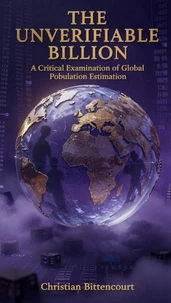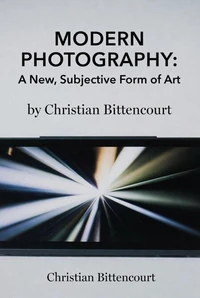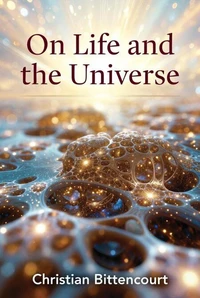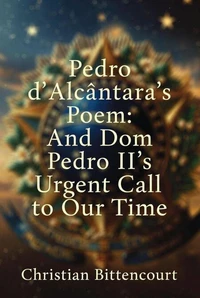



Christian Bittencourt, born in 1965 in São Paulo, is a citizen of the world who has spent many years trying to absorb the entire planet without ever ceasing to be entirely himself. A trained engineer with a Master of Science degree from University College London, he lived and worked in ten different countries for fifteen years - long enough for cultures, languages, and radically different ways of seeing life to leave real marks on him, far beyond mere travel memories.
In every new country, Christian did not merely observe - he internalized, deconstructed, and integrated. With a sharp and adaptable mind, he learned to move fluidly between vastly different universes, carrying the world with him without being carried away by it. At a certain point in this journey, a necessary fracture occurred. What followed was more than a decade of serious and committed inner exploration - not as an escape, but as the most honest of his quests.
With the same intensity he once applied to his professional life, he dedicated himself to personal development across multiple fronts. Awakened by his Scorpionic nature (Snake in the Chinese zodiac) - revealed in the depth and intensity with which he surrenders to any subject worthy of his attention - Christian is someone who has never separated experience from consciousness, nor the outer world he has acquired from the inner world he continues to build.
In every new country, Christian did not merely observe - he internalized, deconstructed, and integrated. With a sharp and adaptable mind, he learned to move fluidly between vastly different universes, carrying the world with him without being carried away by it. At a certain point in this journey, a necessary fracture occurred. What followed was more than a decade of serious and committed inner exploration - not as an escape, but as the most honest of his quests.
With the same intensity he once applied to his professional life, he dedicated himself to personal development across multiple fronts. Awakened by his Scorpionic nature (Snake in the Chinese zodiac) - revealed in the depth and intensity with which he surrenders to any subject worthy of his attention - Christian is someone who has never separated experience from consciousness, nor the outer world he has acquired from the inner world he continues to build.