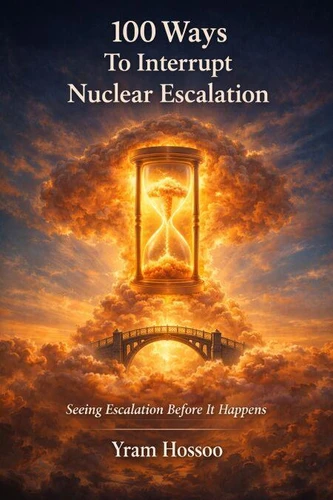
Nuclear war is often imagined as an instant. A flash. A detonation. An irreversible moment of destruction. But the detonation is not the beginning of nuclear war. It is the end of a long chain of interpretation, reaction, and escalation. Long before weapons are launched, signals are exchanged between nations. Military movements are observed. Statements are analyzed. Intentions are inferred. Each interpretation produces another reaction, and those reactions slowly build momentum.
Over time, what began as uncertainty begins to feel inevitable. Yet inevitability is rarely real. It is usually the result of momentum that was never interrupted.100 Ways to Interrupt Nuclear Escalation explores the human mechanisms that drive escalation-fear, power dynamics, perception, retaliation-and examines the moments where recognition can still alter the trajectory of conflict. Rather than presenting ideology or policy prescriptions, the book offers one hundred concise observations about how escalation develops and how it might be interrupted before reaching catastrophe.
In addition to these observations, the book includes rebuttals to common escalation narratives and reflections on how interpretation itself can rebuild the very momentum we seek to avoid. This work does not claim to provide a final solution to nuclear confrontation. Instead, it attempts something more modest but equally important: illuminating the process by which escalation unfolds and identifying the moments where its direction may still change.
If escalation is a process, then somewhere within that process there must exist a moment where recognition can intervene. This book is an exploration of those moments.
Nuclear war is often imagined as an instant. A flash. A detonation. An irreversible moment of destruction. But the detonation is not the beginning of nuclear war. It is the end of a long chain of interpretation, reaction, and escalation. Long before weapons are launched, signals are exchanged between nations. Military movements are observed. Statements are analyzed. Intentions are inferred. Each interpretation produces another reaction, and those reactions slowly build momentum.
Over time, what began as uncertainty begins to feel inevitable. Yet inevitability is rarely real. It is usually the result of momentum that was never interrupted.100 Ways to Interrupt Nuclear Escalation explores the human mechanisms that drive escalation-fear, power dynamics, perception, retaliation-and examines the moments where recognition can still alter the trajectory of conflict. Rather than presenting ideology or policy prescriptions, the book offers one hundred concise observations about how escalation develops and how it might be interrupted before reaching catastrophe.
In addition to these observations, the book includes rebuttals to common escalation narratives and reflections on how interpretation itself can rebuild the very momentum we seek to avoid. This work does not claim to provide a final solution to nuclear confrontation. Instead, it attempts something more modest but equally important: illuminating the process by which escalation unfolds and identifying the moments where its direction may still change.
If escalation is a process, then somewhere within that process there must exist a moment where recognition can intervene. This book is an exploration of those moments.


 , qui est-ce ?