OFFRE LISEUSES
Une liseuse achetée = une housse offerte* jusqu'au 21 juin
- Accueil /
- Irene Dingel
Irene Dingel

Dernière sortie
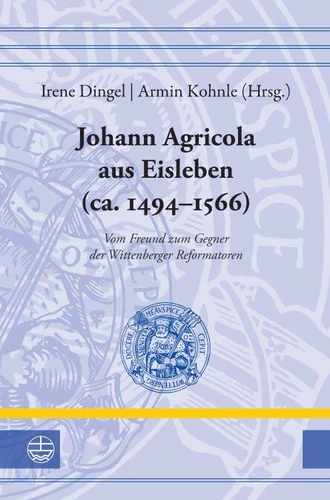
Johann Agricola aus Eisleben (ca. 1494–1566)
Johann Agricola aus Eisleben, auch genannt Islebius, gehörte zum Kreis der Wittenberger Reformatoren und genoss lange das Vertrauen Martin Luthers und Philipp Melanchthons. Aber bald wurde er zu einem ihrer erbittertsten Gegner. Zwar verstand sich Agricola selbst als treuer Repräsentant der Wittenberger Theologie, geriet aber durch seine eigenwilligen Positionen und seine Mitwirkung am Augsburger Interim von 1548 immer wieder in verschiedene Auseinandersetzungen um die reformatorische Lehre.
Selbstbild und Fremdbild klafften weit auseinander. Die hier versammelten Aufsätze versuchen, diesem Befund auf den Grund zu gehen, indem sie die verschiedenen Wirkungsstätten und Wirkungsperioden Agricolas in den Blick nehmen und dazu die in jenen Zusammenhängen entstandenen Schriften heranziehen. Damit eröffnet der Band eine neue Perspektive auf Agricola, die ihn nicht auf den Streittheologen reduziert, sondern die Vielfalt seines Lebens und Wirkens erschließt. Mit Beiträgen von Marion Bechtold-Mayer, Irene Dingel, Tobias Jammerthal, Henning P.
Jürgens, Brandt Klawitter, Ingo Klitzsch, Armin Kohnle, Nicole Kuropka, Stefan Michel, Stefan Michels, Markus Müller, Jonathan Reinert, Stefan Rhein, Hans-Otto Schneider, Eike Hinrich Thomsen und Christopher Voigt-Goy. [Johann Agricola from Eisleben (ca. 1494-1566). From Friend to Foe of the Wittenberg Reformers] Johann Agricola from Eisleben, also known as Islebius, belonged to the circle of Wittenberg reformers and enjoyed the trust of Martin Luther and Philipp Melanchthon for a long time.
However, he eventually became one of their fiercest opponents. Agricola saw himself as a faithful representative of Wittenberg theology. Nonetheless, due to his unconventional positions and his involvement in the Augsburg Interim of 1548, he repeatedly became embroiled in various disputes about the doctrine of the Reformation. Self-image and external image diverged widely. The contributions collected here attempt to get to the bottom of this observation by looking at Agricola's various places and periods of activity and drawing on the writings produced in these contexts.
The volume thus opens up a new perspective on Agricola that does not reduce him to merely a controversial theologian, but rather reveals the diversity of his life and work.
Selbstbild und Fremdbild klafften weit auseinander. Die hier versammelten Aufsätze versuchen, diesem Befund auf den Grund zu gehen, indem sie die verschiedenen Wirkungsstätten und Wirkungsperioden Agricolas in den Blick nehmen und dazu die in jenen Zusammenhängen entstandenen Schriften heranziehen. Damit eröffnet der Band eine neue Perspektive auf Agricola, die ihn nicht auf den Streittheologen reduziert, sondern die Vielfalt seines Lebens und Wirkens erschließt. Mit Beiträgen von Marion Bechtold-Mayer, Irene Dingel, Tobias Jammerthal, Henning P.
Jürgens, Brandt Klawitter, Ingo Klitzsch, Armin Kohnle, Nicole Kuropka, Stefan Michel, Stefan Michels, Markus Müller, Jonathan Reinert, Stefan Rhein, Hans-Otto Schneider, Eike Hinrich Thomsen und Christopher Voigt-Goy. [Johann Agricola from Eisleben (ca. 1494-1566). From Friend to Foe of the Wittenberg Reformers] Johann Agricola from Eisleben, also known as Islebius, belonged to the circle of Wittenberg reformers and enjoyed the trust of Martin Luther and Philipp Melanchthon for a long time.
However, he eventually became one of their fiercest opponents. Agricola saw himself as a faithful representative of Wittenberg theology. Nonetheless, due to his unconventional positions and his involvement in the Augsburg Interim of 1548, he repeatedly became embroiled in various disputes about the doctrine of the Reformation. Self-image and external image diverged widely. The contributions collected here attempt to get to the bottom of this observation by looking at Agricola's various places and periods of activity and drawing on the writings produced in these contexts.
The volume thus opens up a new perspective on Agricola that does not reduce him to merely a controversial theologian, but rather reveals the diversity of his life and work.
Johann Agricola aus Eisleben, auch genannt Islebius, gehörte zum Kreis der Wittenberger Reformatoren und genoss lange das Vertrauen Martin Luthers und Philipp Melanchthons. Aber bald wurde er zu einem ihrer erbittertsten Gegner. Zwar verstand sich Agricola selbst als treuer Repräsentant der Wittenberger Theologie, geriet aber durch seine eigenwilligen Positionen und seine Mitwirkung am Augsburger Interim von 1548 immer wieder in verschiedene Auseinandersetzungen um die reformatorische Lehre.
Selbstbild und Fremdbild klafften weit auseinander. Die hier versammelten Aufsätze versuchen, diesem Befund auf den Grund zu gehen, indem sie die verschiedenen Wirkungsstätten und Wirkungsperioden Agricolas in den Blick nehmen und dazu die in jenen Zusammenhängen entstandenen Schriften heranziehen. Damit eröffnet der Band eine neue Perspektive auf Agricola, die ihn nicht auf den Streittheologen reduziert, sondern die Vielfalt seines Lebens und Wirkens erschließt. Mit Beiträgen von Marion Bechtold-Mayer, Irene Dingel, Tobias Jammerthal, Henning P.
Jürgens, Brandt Klawitter, Ingo Klitzsch, Armin Kohnle, Nicole Kuropka, Stefan Michel, Stefan Michels, Markus Müller, Jonathan Reinert, Stefan Rhein, Hans-Otto Schneider, Eike Hinrich Thomsen und Christopher Voigt-Goy. [Johann Agricola from Eisleben (ca. 1494-1566). From Friend to Foe of the Wittenberg Reformers] Johann Agricola from Eisleben, also known as Islebius, belonged to the circle of Wittenberg reformers and enjoyed the trust of Martin Luther and Philipp Melanchthon for a long time.
However, he eventually became one of their fiercest opponents. Agricola saw himself as a faithful representative of Wittenberg theology. Nonetheless, due to his unconventional positions and his involvement in the Augsburg Interim of 1548, he repeatedly became embroiled in various disputes about the doctrine of the Reformation. Self-image and external image diverged widely. The contributions collected here attempt to get to the bottom of this observation by looking at Agricola's various places and periods of activity and drawing on the writings produced in these contexts.
The volume thus opens up a new perspective on Agricola that does not reduce him to merely a controversial theologian, but rather reveals the diversity of his life and work.
Selbstbild und Fremdbild klafften weit auseinander. Die hier versammelten Aufsätze versuchen, diesem Befund auf den Grund zu gehen, indem sie die verschiedenen Wirkungsstätten und Wirkungsperioden Agricolas in den Blick nehmen und dazu die in jenen Zusammenhängen entstandenen Schriften heranziehen. Damit eröffnet der Band eine neue Perspektive auf Agricola, die ihn nicht auf den Streittheologen reduziert, sondern die Vielfalt seines Lebens und Wirkens erschließt. Mit Beiträgen von Marion Bechtold-Mayer, Irene Dingel, Tobias Jammerthal, Henning P.
Jürgens, Brandt Klawitter, Ingo Klitzsch, Armin Kohnle, Nicole Kuropka, Stefan Michel, Stefan Michels, Markus Müller, Jonathan Reinert, Stefan Rhein, Hans-Otto Schneider, Eike Hinrich Thomsen und Christopher Voigt-Goy. [Johann Agricola from Eisleben (ca. 1494-1566). From Friend to Foe of the Wittenberg Reformers] Johann Agricola from Eisleben, also known as Islebius, belonged to the circle of Wittenberg reformers and enjoyed the trust of Martin Luther and Philipp Melanchthon for a long time.
However, he eventually became one of their fiercest opponents. Agricola saw himself as a faithful representative of Wittenberg theology. Nonetheless, due to his unconventional positions and his involvement in the Augsburg Interim of 1548, he repeatedly became embroiled in various disputes about the doctrine of the Reformation. Self-image and external image diverged widely. The contributions collected here attempt to get to the bottom of this observation by looking at Agricola's various places and periods of activity and drawing on the writings produced in these contexts.
The volume thus opens up a new perspective on Agricola that does not reduce him to merely a controversial theologian, but rather reveals the diversity of his life and work.
Les livres de Irene Dingel


Zwischen Ekklesiologie und Administration. Modelle territorialer Kirchenleitung und Religionsverwaltung im Jahrhundert der europäischen Reformationen
Johannes Wischmeyer, Sabine Arend, Axel Gotthard, Irene Dingel, Georg Plasger
E-book
60,00 €

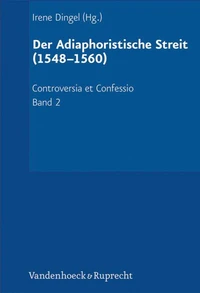
Antitrinitarische Streitigkeiten. Die tritheistische Phase (1560–1568)
Irene Dingel, Kestutis Daugirdas
E-book
140,00 €

225,00 €

Philip Melanchthon. Theologian in Classroom, Confession, and Controversy
Irene Dingel, Timothy J. Wengert, Robert Kolb, Nicole Kuropka
E-book
110,00 €

Reformation - Union - Erweckung. Beispiele aus der Kirchengeschichte Südwestdeutschlands
Gustav Adolf Benrath, Wolf-Friedrich Schäufele, Irene Dingel, Klaus Bümlein
E-book
70,00 €

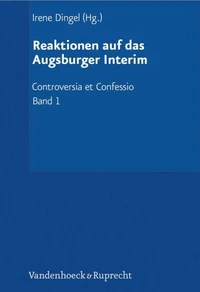
Reaktionen auf das Augsburger Interim. Der Interimistische Streit (1548-1549)
Irene Dingel, Johannes Hund, Jan Martin Lies, Hans-Otto Schneider
E-book
225,00 €

Toleranz und Identität. Geschichtsschreibung und Geschichtsbewusstsein zwischen religiösem Anspruch und historischer Erfahrung
Kerstin Armborst-Weihs, Judith Becker, Susan Boettcher, Mariano Delgado, Irene Dingel
E-book
70,00 €

37,99 €