
Prof. Dr. phil. theol. habil. Irene Dingel ist Direktorin des Leibniz-Instituts für Europäische Geschichte, Abteilung für Abendländische Religionsgeschichte, Mainz.
Timothy J. Wengert ist em. Professor für Kirchengeschichte am Lutheran Theological Seminary in Philadelphia, USA.
Dr. Robert Kolb ist Professor em. für Systematische Theologie am Concordia Seminary in Saint Louis, USA.
Nicole Kuropka ist Gastdozentin an der Kirchlichen Hochschule in Wuppertal/Bethel und Berufsschulpfarrerin in Düsseldorf.
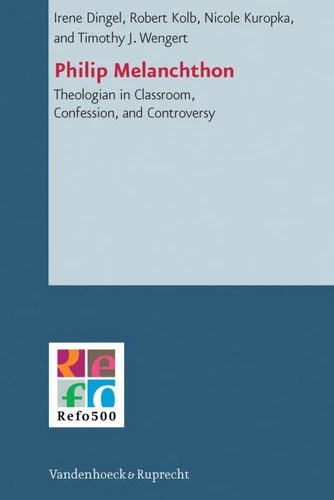
Philip Melanchthon. Theologian in Classroom, Confession, and Controversy
Par : , , ,Formats :
Disponible dans votre compte client Decitre ou Furet du Nord dès validation de votre commande. Le format PDF est :
- Compatible avec une lecture sur My Vivlio (smartphone, tablette, ordinateur)
- Compatible avec une lecture sur liseuses Vivlio
- Pour les liseuses autres que Vivlio, vous devez utiliser le logiciel Adobe Digital Edition. Non compatible avec la lecture sur les liseuses Kindle, Remarkable et Sony
 , qui est-ce ?
Notre partenaire de plateforme de lecture numérique où vous retrouverez l'ensemble de vos ebooks gratuitement
Pour en savoir plus sur nos ebooks, consultez notre aide en ligne ici
C'est si simple ! Lisez votre ebook avec l'app Vivlio sur votre tablette, mobile ou ordinateur :

- Nombre de pages288
- FormatPDF
- ISBN978-3-647-55047-3
- EAN9783647550473
- Date de parution24/10/2012
- Protection num.pas de protection
- Taille3 Mo
- Infos supplémentairespdf
- ÉditeurVandenhoeck & Ruprecht
Résumé
These twelve essays by international scholars investigate Melanchthon's theological activities as teacher, confessor of the faith, and defender of his doctrine and ecclesiastical policies as they developed within the context of his service of society and church. In the past quarter century Melanchthon researchers have scrutinized older, mostly negative, interpretations of the Preceptor Germaniae. The editors present in this volume precisely focused appraisals of »Master Philip« in his role as theologian at the university and in the service of his own prince and others.
By carefully placing his use of Aristotle, his understanding of the nature of training for pastoral ministry, his biblical exegesis in context, by analyzing four of his attempts to formulate Wittenberg teaching in public confession, by assessing how his own writings took on normative character for the church, and by tracing his thinking on the free will and the Lord's Supper in the midst of controversy, these authors offer carefully etched portraits of Melanchthon as Preceptor ecclesiae.
This volume contributes to the expansion of our understanding of Melanchthon as key figure in the Wittenberg Reformation and the currents of controversy that have long surrounded the interpretation of his contributions.
By carefully placing his use of Aristotle, his understanding of the nature of training for pastoral ministry, his biblical exegesis in context, by analyzing four of his attempts to formulate Wittenberg teaching in public confession, by assessing how his own writings took on normative character for the church, and by tracing his thinking on the free will and the Lord's Supper in the midst of controversy, these authors offer carefully etched portraits of Melanchthon as Preceptor ecclesiae.
This volume contributes to the expansion of our understanding of Melanchthon as key figure in the Wittenberg Reformation and the currents of controversy that have long surrounded the interpretation of his contributions.
A propos de Irene Dingel
160,00 €


18,00 €
110,00 €



39,00 €