- Accueil /
- Peter Zimmerling
Peter Zimmerling

Dernière sortie
Ein Gott, der richtet?
Die Vorstellung von einem richtenden Gott spielt gegenwärtig in Theologie, Kirche und Gesellschaft höchstens eine marginale Rolle. Das verbreitete Bild vom liebenden Gott wird häufig als unvereinbar mit einem richtenden Handeln Gottes betrachtet. Im Gegensatz dazu ist die Rede vom unberechenbaren, zornigen und richtenden Gott fester Bestandteil des Alten und Neuen Testaments: »Schrecklich ist's, in die Hände des lebendigen Gottes zu fallen.« (Hebr 10, 31).
Auch die biblische Hoffnung auf ein Ende allen Unrechts ist untrennbar mit der Erwartung von Gottes Gericht verbunden.
Das Buch fragt, wie ein richtender Gott heute theologisch gedacht und im kirchlichen Leben zur Geltung gebracht werden kann. Das geschieht in (ökumenischen) Beiträgen aus den unterschiedlichen theologischen Disziplinen und aus dem Bereich von Psychologie und Kunstgeschichte. Mit Beiträgen von Michael Beintker, Ingolf U. Dalferth, Roland Deines, Julia Drube, Josip Gregur, Martin P. Grünholz, Rüdiger Lux, Markus Schmidt, Stefan Schweyer, Günter Thomas, Michael Utsch, Frank Weigelt und Peter Zimmerling. [A God Who Judges?] The idea of a judging God currently plays at most a marginal role in theology, the church, and society.
The widespread image of a loving God is often considered incompatible with God's judgemental actions. In contrast, talk of an unpredictable, angry, and judging God is an integral part of the Old and New Testaments: »It is a dreadful thing to fall into the hands of the living God« (Hebrews 10:31). The biblical hope for an end to all injustice is also inseparably linked to the expectation of God's judgement.
The book asks how a judging God can be conceived theologically today and brought to bear in church life. This is done in (ecumenical) contributions from the different theological disciplines and from the fields of psychology and art history.
Das Buch fragt, wie ein richtender Gott heute theologisch gedacht und im kirchlichen Leben zur Geltung gebracht werden kann. Das geschieht in (ökumenischen) Beiträgen aus den unterschiedlichen theologischen Disziplinen und aus dem Bereich von Psychologie und Kunstgeschichte. Mit Beiträgen von Michael Beintker, Ingolf U. Dalferth, Roland Deines, Julia Drube, Josip Gregur, Martin P. Grünholz, Rüdiger Lux, Markus Schmidt, Stefan Schweyer, Günter Thomas, Michael Utsch, Frank Weigelt und Peter Zimmerling. [A God Who Judges?] The idea of a judging God currently plays at most a marginal role in theology, the church, and society.
The widespread image of a loving God is often considered incompatible with God's judgemental actions. In contrast, talk of an unpredictable, angry, and judging God is an integral part of the Old and New Testaments: »It is a dreadful thing to fall into the hands of the living God« (Hebrews 10:31). The biblical hope for an end to all injustice is also inseparably linked to the expectation of God's judgement.
The book asks how a judging God can be conceived theologically today and brought to bear in church life. This is done in (ecumenical) contributions from the different theological disciplines and from the fields of psychology and art history.
Die Vorstellung von einem richtenden Gott spielt gegenwärtig in Theologie, Kirche und Gesellschaft höchstens eine marginale Rolle. Das verbreitete Bild vom liebenden Gott wird häufig als unvereinbar mit einem richtenden Handeln Gottes betrachtet. Im Gegensatz dazu ist die Rede vom unberechenbaren, zornigen und richtenden Gott fester Bestandteil des Alten und Neuen Testaments: »Schrecklich ist's, in die Hände des lebendigen Gottes zu fallen.« (Hebr 10, 31).
Auch die biblische Hoffnung auf ein Ende allen Unrechts ist untrennbar mit der Erwartung von Gottes Gericht verbunden.
Das Buch fragt, wie ein richtender Gott heute theologisch gedacht und im kirchlichen Leben zur Geltung gebracht werden kann. Das geschieht in (ökumenischen) Beiträgen aus den unterschiedlichen theologischen Disziplinen und aus dem Bereich von Psychologie und Kunstgeschichte. Mit Beiträgen von Michael Beintker, Ingolf U. Dalferth, Roland Deines, Julia Drube, Josip Gregur, Martin P. Grünholz, Rüdiger Lux, Markus Schmidt, Stefan Schweyer, Günter Thomas, Michael Utsch, Frank Weigelt und Peter Zimmerling. [A God Who Judges?] The idea of a judging God currently plays at most a marginal role in theology, the church, and society.
The widespread image of a loving God is often considered incompatible with God's judgemental actions. In contrast, talk of an unpredictable, angry, and judging God is an integral part of the Old and New Testaments: »It is a dreadful thing to fall into the hands of the living God« (Hebrews 10:31). The biblical hope for an end to all injustice is also inseparably linked to the expectation of God's judgement.
The book asks how a judging God can be conceived theologically today and brought to bear in church life. This is done in (ecumenical) contributions from the different theological disciplines and from the fields of psychology and art history.
Das Buch fragt, wie ein richtender Gott heute theologisch gedacht und im kirchlichen Leben zur Geltung gebracht werden kann. Das geschieht in (ökumenischen) Beiträgen aus den unterschiedlichen theologischen Disziplinen und aus dem Bereich von Psychologie und Kunstgeschichte. Mit Beiträgen von Michael Beintker, Ingolf U. Dalferth, Roland Deines, Julia Drube, Josip Gregur, Martin P. Grünholz, Rüdiger Lux, Markus Schmidt, Stefan Schweyer, Günter Thomas, Michael Utsch, Frank Weigelt und Peter Zimmerling. [A God Who Judges?] The idea of a judging God currently plays at most a marginal role in theology, the church, and society.
The widespread image of a loving God is often considered incompatible with God's judgemental actions. In contrast, talk of an unpredictable, angry, and judging God is an integral part of the Old and New Testaments: »It is a dreadful thing to fall into the hands of the living God« (Hebrews 10:31). The biblical hope for an end to all injustice is also inseparably linked to the expectation of God's judgement.
The book asks how a judging God can be conceived theologically today and brought to bear in church life. This is done in (ecumenical) contributions from the different theological disciplines and from the fields of psychology and art history.
Les livres de Peter Zimmerling


Dietrich Bonhoeffer und die Jugendarbeit. Jesus nachfolgen und gemeinsam leben. Andrew Root stellt diese bisher wenig beachtete Facette von Dietrich Bonhoeffers Wirken vor.
Andrew Root, Judith Hildebrandt, Andreas Jägers, Renate Hübsch, Peter Zimmerling
E-book
22,99 €

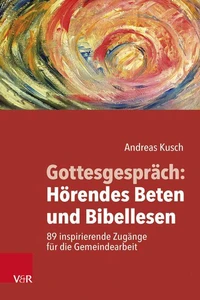
Gottesgespräch: Hörendes Beten und Bibellesen. 89 inspirierende Zugänge für die Gemeindearbeit
Andreas Kusch, Peter Zimmerling
E-book
25,00 €

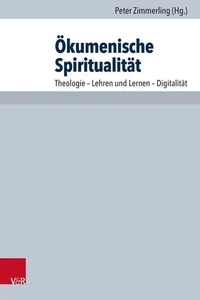
Ökumenische Spiritualität. Theologie – Lehren und Lernen – Digitalität
Peter Zimmerling, Ralph Kunz, Ludger Schwienhorst-Schönberge, Bruno Schrage
E-book
85,00 €

30,00 €

23,00 €

11,99 €

28,00 €

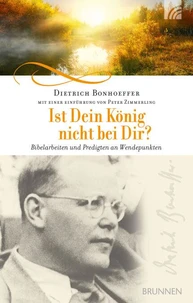
Ist Dein König nicht bei Dir?. Bibelarbeiten und Predigten an Wendepunkten
Dietrich Bonhoeffer, Peter Zimmerling
E-book
12,99 €

40,00 €

40,00 €

Bleibt der Erde treu. ausgewählte Predigten, Bibelarbeiten und Meditationen
Dietrich Bonhoeffer, Peter Zimmerling
E-book
14,99 €

Handbuch Evangelische Spiritualität. Band 3: Praxis
Peter Zimmerling, Roger Mielke, Thomas Popp, Karl Ludwig Ihmels, Harald Schroeter-Wittke
E-book
69,00 €

Johann Jakob Rambach (1693–1735). Praktischer Theologe und Schriftausleger
Helge Stadelmann, Peter Zimmerling
E-book
29,99 €

Du wartest jede Stunde mit mir. Die Briefe aus dem Gefängnis
Dietrich Bonhoeffer, Peter Zimmerling
E-book
15,99 €

Aber bei dir ist Licht. Gebete, Gedichte und Gedanken aus dem Gefängnis
Dietrich Bonhoeffer, Peter Zimmerling
E-book
9,99 €


Schöpfung und Fall. Theologische Auslegung von Genesis 1 bis 3
Dietrich Bonhoeffer, Peter Zimmerling
E-book
10,40 €

Handbuch Evangelische Spiritualität. Band 2: Theologie
Peter Zimmerling, Nikolaus Schneider, Almut Beringer, Reinhold Bernhardt
E-book
59,00 €

Handbuch Evangelische Spiritualität. Band 1: Geschichte
Peter Zimmerling, Heinrich Bedford-Strohm, Carsten Rentzing, Armin Kohnle
E-book
59,00 €