OFFRE LISEUSES
Une liseuse achetée = une housse offerte* jusqu'au 21 juin
- Accueil /
- Dietmar Neß
Dietmar Neß

Dernière sortie
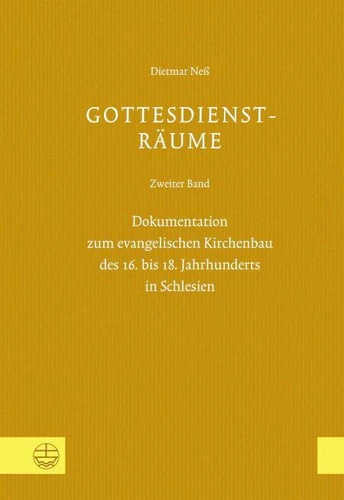
Gottesdienst-Räume
Im oberschlesischen Tarnowitz errichteten eingewanderte Bergknappen im Jahr 1526 ein hölzernes, bereits 1531 durch einen Steinbau ersetztes Kirchlein - das erste in Schlesien nachgewiesene der sich ausbreiteten evangelisch-reformatorischen Form christlichen Glaubens. Der hier vorgelegte zweite Teil der »Gottesdienst-Räume« erschließt im Text und soweit möglich auch im Bild ihre weitere Folge und Fülle bis an das Ende des 18.
Jahrhunderts. Er vervollständigt damit die bereits für das 19. und 20. Jahrhundert vorliegende Dokumentation. Er ist wiederum das Bemühen um ein vollständiges Verzeichnis, eine chronologische Inventur aller Versammlungsräume, die sich evangelische Gemeinden errichtet haben, in Notbehelfen einfachster Gestalt bis hinzu den heute zum Weltkulturerbe gehörenden beiden Friedenskirchen in Jauer und Schweidnitz. Im Bildteil konnten 938 Abbildungen zusammengetragen werden, der Text bietet in chronologischer Folge Grunddaten und Literatur, eine Einführung skizziert knapp die kirchengeschichtliche Einbettung.
Im Ziel steht der Versammlungsraum der Gemeinde, nicht Architekturgeschichte. Es sind Bilder von und Erinnerung an eine einst große und vielgestaltige deutsche Kirchenprovinz. [Worship Rooms Second Volume: A Documentation on Protestant Church Construction of the 16th to 18th Centuries in Silesia] In Tarnowitz in Upper Silesia, immigrant miners erected a small wooden church in 1526, which was replaced by a stone building in 1531 - it was the first church of the spreading Protestant-Reformational form of Christian faith in Silesia.
In texts and, as far as possible, also in pictures, the second part of "Worship Rooms" presented here develops their further impact and wealth up to the end of the 18th century. It thus completes the documentation already available for the 19th and 20th centuries. It is, in turn, the quest for a complete index, a chronological inventory of all meeting rooms that were built by Protestant communities, in makeshift buildings of the simplest form up to the two churches of peace in Jauer and Schweidnitz, which today belong to the world cultural heritage. In the picture section, 938 illustrations could be collected; the text offers basic data and literature in chronological order, and an introduction sketches briefly its embedding in church history.
The aim is the community's meeting room, not architectural history. These are pictures and memories of a German church province that was once great and diverse.
Jahrhunderts. Er vervollständigt damit die bereits für das 19. und 20. Jahrhundert vorliegende Dokumentation. Er ist wiederum das Bemühen um ein vollständiges Verzeichnis, eine chronologische Inventur aller Versammlungsräume, die sich evangelische Gemeinden errichtet haben, in Notbehelfen einfachster Gestalt bis hinzu den heute zum Weltkulturerbe gehörenden beiden Friedenskirchen in Jauer und Schweidnitz. Im Bildteil konnten 938 Abbildungen zusammengetragen werden, der Text bietet in chronologischer Folge Grunddaten und Literatur, eine Einführung skizziert knapp die kirchengeschichtliche Einbettung.
Im Ziel steht der Versammlungsraum der Gemeinde, nicht Architekturgeschichte. Es sind Bilder von und Erinnerung an eine einst große und vielgestaltige deutsche Kirchenprovinz. [Worship Rooms Second Volume: A Documentation on Protestant Church Construction of the 16th to 18th Centuries in Silesia] In Tarnowitz in Upper Silesia, immigrant miners erected a small wooden church in 1526, which was replaced by a stone building in 1531 - it was the first church of the spreading Protestant-Reformational form of Christian faith in Silesia.
In texts and, as far as possible, also in pictures, the second part of "Worship Rooms" presented here develops their further impact and wealth up to the end of the 18th century. It thus completes the documentation already available for the 19th and 20th centuries. It is, in turn, the quest for a complete index, a chronological inventory of all meeting rooms that were built by Protestant communities, in makeshift buildings of the simplest form up to the two churches of peace in Jauer and Schweidnitz, which today belong to the world cultural heritage. In the picture section, 938 illustrations could be collected; the text offers basic data and literature in chronological order, and an introduction sketches briefly its embedding in church history.
The aim is the community's meeting room, not architectural history. These are pictures and memories of a German church province that was once great and diverse.
Im oberschlesischen Tarnowitz errichteten eingewanderte Bergknappen im Jahr 1526 ein hölzernes, bereits 1531 durch einen Steinbau ersetztes Kirchlein - das erste in Schlesien nachgewiesene der sich ausbreiteten evangelisch-reformatorischen Form christlichen Glaubens. Der hier vorgelegte zweite Teil der »Gottesdienst-Räume« erschließt im Text und soweit möglich auch im Bild ihre weitere Folge und Fülle bis an das Ende des 18.
Jahrhunderts. Er vervollständigt damit die bereits für das 19. und 20. Jahrhundert vorliegende Dokumentation. Er ist wiederum das Bemühen um ein vollständiges Verzeichnis, eine chronologische Inventur aller Versammlungsräume, die sich evangelische Gemeinden errichtet haben, in Notbehelfen einfachster Gestalt bis hinzu den heute zum Weltkulturerbe gehörenden beiden Friedenskirchen in Jauer und Schweidnitz. Im Bildteil konnten 938 Abbildungen zusammengetragen werden, der Text bietet in chronologischer Folge Grunddaten und Literatur, eine Einführung skizziert knapp die kirchengeschichtliche Einbettung.
Im Ziel steht der Versammlungsraum der Gemeinde, nicht Architekturgeschichte. Es sind Bilder von und Erinnerung an eine einst große und vielgestaltige deutsche Kirchenprovinz. [Worship Rooms Second Volume: A Documentation on Protestant Church Construction of the 16th to 18th Centuries in Silesia] In Tarnowitz in Upper Silesia, immigrant miners erected a small wooden church in 1526, which was replaced by a stone building in 1531 - it was the first church of the spreading Protestant-Reformational form of Christian faith in Silesia.
In texts and, as far as possible, also in pictures, the second part of "Worship Rooms" presented here develops their further impact and wealth up to the end of the 18th century. It thus completes the documentation already available for the 19th and 20th centuries. It is, in turn, the quest for a complete index, a chronological inventory of all meeting rooms that were built by Protestant communities, in makeshift buildings of the simplest form up to the two churches of peace in Jauer and Schweidnitz, which today belong to the world cultural heritage. In the picture section, 938 illustrations could be collected; the text offers basic data and literature in chronological order, and an introduction sketches briefly its embedding in church history.
The aim is the community's meeting room, not architectural history. These are pictures and memories of a German church province that was once great and diverse.
Jahrhunderts. Er vervollständigt damit die bereits für das 19. und 20. Jahrhundert vorliegende Dokumentation. Er ist wiederum das Bemühen um ein vollständiges Verzeichnis, eine chronologische Inventur aller Versammlungsräume, die sich evangelische Gemeinden errichtet haben, in Notbehelfen einfachster Gestalt bis hinzu den heute zum Weltkulturerbe gehörenden beiden Friedenskirchen in Jauer und Schweidnitz. Im Bildteil konnten 938 Abbildungen zusammengetragen werden, der Text bietet in chronologischer Folge Grunddaten und Literatur, eine Einführung skizziert knapp die kirchengeschichtliche Einbettung.
Im Ziel steht der Versammlungsraum der Gemeinde, nicht Architekturgeschichte. Es sind Bilder von und Erinnerung an eine einst große und vielgestaltige deutsche Kirchenprovinz. [Worship Rooms Second Volume: A Documentation on Protestant Church Construction of the 16th to 18th Centuries in Silesia] In Tarnowitz in Upper Silesia, immigrant miners erected a small wooden church in 1526, which was replaced by a stone building in 1531 - it was the first church of the spreading Protestant-Reformational form of Christian faith in Silesia.
In texts and, as far as possible, also in pictures, the second part of "Worship Rooms" presented here develops their further impact and wealth up to the end of the 18th century. It thus completes the documentation already available for the 19th and 20th centuries. It is, in turn, the quest for a complete index, a chronological inventory of all meeting rooms that were built by Protestant communities, in makeshift buildings of the simplest form up to the two churches of peace in Jauer and Schweidnitz, which today belong to the world cultural heritage. In the picture section, 938 illustrations could be collected; the text offers basic data and literature in chronological order, and an introduction sketches briefly its embedding in church history.
The aim is the community's meeting room, not architectural history. These are pictures and memories of a German church province that was once great and diverse.
Les livres de Dietmar Neß

65,99 €

69,99 €

89,99 €

74,99 €

74,99 €

74,99 €

Schlesisches Pfarrerbuch. Zweiter Band: Regierungsbezirk Breslau, Teil II
Dietmar Neß, Verein für Schlesische Kirchen
E-book
79,99 €

Schlesisches Pfarrerbuch. Dritter Band: Regierungsbezirk Breslau, Teil III
Dietmar Neß, Verein für Schlesische Kirchen
E-book
89,99 €

Schlesisches Pfarrerbuch. Vierter Band: Regierungsbezirk Breslau, Teil IV
Dietmar Neß, Verein für Schlesische Kirchen
E-book
79,99 €

Schlesisches Pfarrerbuch. Erster Band: Regierungsbezirk Breslau, Teil I
Dietmar Neß, Verein für Schlesische Kirchen
E-book
69,99 €