- Accueil /
- Dr. Raymond Leslie Newkirk
Dr. Raymond Leslie Newkirk

Dernière sortie
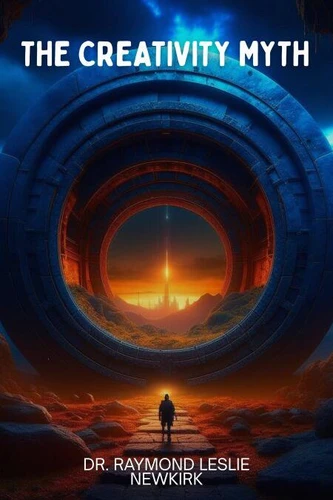
The Creativity Myth
"The Creativity Myth" is an interesting title because many people throughout Human History appear to be very CREATIVE. How could Human Creativity ever be seen as a Myth? This is certainly a bold statement and even a bolder title for a book. Don't you think? Let us pause for a moment and take a look. So, what have we been told about creativity?We are told that Creativity is a global human capacity for originality and newness.
Out with the old and in with the new in many different ways and in many different areas of interest from Science to the Arts. Creativity is about doing something better; but is can also end up meaning doing something worse. After all, worse is creative and can also be new, but not better. Historically, some creative ideas have been terrible for Humanity. Think Nuclear Weapons. These weapons were certainly unique and also useful for their intended purpose.
They solved World War II. Now, of course, we have the Internet and it has assisted many people with initiating their new enterprises that solved many kinds of different problems, and also initiated many more new problems. Life is like this - out with the old problems and in with the new problems. How creative. Simply wonderous. Human Imagination often works in overtime and in overdrive. Imagine that.
Although it is often unfortunate for doing so, Humanity is very good at using its mind to picture things that it cannot see. I have worked with many problem-solvers in organizations who were indeed very, very good at solving the wrong problems with in-depth novelty. These people presented new solutions to old problems so they could contract on finding solutions to the new problems they created by solving the old problems that were less costly than the new problems created to solve the old problems.
We are told that Creativity is omnipresent in human endeavors because creativity is a natural human power, a common behavior so to speak. Ouch and ouch again. Can this possibly be true? Is this the Case for Creativity? If so, let me ask: Where Did Creativity begin? More to the point, where did Human Creativity begin? When did Humanity become creative? How did Humanity become Creative?
Out with the old and in with the new in many different ways and in many different areas of interest from Science to the Arts. Creativity is about doing something better; but is can also end up meaning doing something worse. After all, worse is creative and can also be new, but not better. Historically, some creative ideas have been terrible for Humanity. Think Nuclear Weapons. These weapons were certainly unique and also useful for their intended purpose.
They solved World War II. Now, of course, we have the Internet and it has assisted many people with initiating their new enterprises that solved many kinds of different problems, and also initiated many more new problems. Life is like this - out with the old problems and in with the new problems. How creative. Simply wonderous. Human Imagination often works in overtime and in overdrive. Imagine that.
Although it is often unfortunate for doing so, Humanity is very good at using its mind to picture things that it cannot see. I have worked with many problem-solvers in organizations who were indeed very, very good at solving the wrong problems with in-depth novelty. These people presented new solutions to old problems so they could contract on finding solutions to the new problems they created by solving the old problems that were less costly than the new problems created to solve the old problems.
We are told that Creativity is omnipresent in human endeavors because creativity is a natural human power, a common behavior so to speak. Ouch and ouch again. Can this possibly be true? Is this the Case for Creativity? If so, let me ask: Where Did Creativity begin? More to the point, where did Human Creativity begin? When did Humanity become creative? How did Humanity become Creative?
"The Creativity Myth" is an interesting title because many people throughout Human History appear to be very CREATIVE. How could Human Creativity ever be seen as a Myth? This is certainly a bold statement and even a bolder title for a book. Don't you think? Let us pause for a moment and take a look. So, what have we been told about creativity?We are told that Creativity is a global human capacity for originality and newness.
Out with the old and in with the new in many different ways and in many different areas of interest from Science to the Arts. Creativity is about doing something better; but is can also end up meaning doing something worse. After all, worse is creative and can also be new, but not better. Historically, some creative ideas have been terrible for Humanity. Think Nuclear Weapons. These weapons were certainly unique and also useful for their intended purpose.
They solved World War II. Now, of course, we have the Internet and it has assisted many people with initiating their new enterprises that solved many kinds of different problems, and also initiated many more new problems. Life is like this - out with the old problems and in with the new problems. How creative. Simply wonderous. Human Imagination often works in overtime and in overdrive. Imagine that.
Although it is often unfortunate for doing so, Humanity is very good at using its mind to picture things that it cannot see. I have worked with many problem-solvers in organizations who were indeed very, very good at solving the wrong problems with in-depth novelty. These people presented new solutions to old problems so they could contract on finding solutions to the new problems they created by solving the old problems that were less costly than the new problems created to solve the old problems.
We are told that Creativity is omnipresent in human endeavors because creativity is a natural human power, a common behavior so to speak. Ouch and ouch again. Can this possibly be true? Is this the Case for Creativity? If so, let me ask: Where Did Creativity begin? More to the point, where did Human Creativity begin? When did Humanity become creative? How did Humanity become Creative?
Out with the old and in with the new in many different ways and in many different areas of interest from Science to the Arts. Creativity is about doing something better; but is can also end up meaning doing something worse. After all, worse is creative and can also be new, but not better. Historically, some creative ideas have been terrible for Humanity. Think Nuclear Weapons. These weapons were certainly unique and also useful for their intended purpose.
They solved World War II. Now, of course, we have the Internet and it has assisted many people with initiating their new enterprises that solved many kinds of different problems, and also initiated many more new problems. Life is like this - out with the old problems and in with the new problems. How creative. Simply wonderous. Human Imagination often works in overtime and in overdrive. Imagine that.
Although it is often unfortunate for doing so, Humanity is very good at using its mind to picture things that it cannot see. I have worked with many problem-solvers in organizations who were indeed very, very good at solving the wrong problems with in-depth novelty. These people presented new solutions to old problems so they could contract on finding solutions to the new problems they created by solving the old problems that were less costly than the new problems created to solve the old problems.
We are told that Creativity is omnipresent in human endeavors because creativity is a natural human power, a common behavior so to speak. Ouch and ouch again. Can this possibly be true? Is this the Case for Creativity? If so, let me ask: Where Did Creativity begin? More to the point, where did Human Creativity begin? When did Humanity become creative? How did Humanity become Creative?
Les livres de Dr. Raymond Leslie Newkirk
Nouveauté

The Puzzle of Life; Putting the Pieces Together
Raymond Newkirk, Psy.D., Ph.D., Dr. Raymond Leslie Newkirk
E-book
13,99 €
Nouveauté

13,99 €
Nouveauté

16,49 €
Nouveauté

Mastering The Psychology of ATICS Project Analysis
Raymond Newkirk, Psy.D., Ph.D., Dr. Raymond Leslie Newkirk
E-book
14,99 €
Nouveauté

Forever Forward Becoming A Type I Civilization Part 4. Forever Forward Becoming a Type I Civilization, #4
Raymond Newkirk, Psy.D., Ph.D., Dr. Raymond Leslie Newkirk
E-book
17,49 €
Nouveauté

Forever Forward Becoming a Type I Civilization Part 3. Forever Forward Becoming a Type I Civilization, #3
Raymond Newkirk, Psy.D., Ph.D., Dr. Raymond Leslie Newkirk
E-book
17,49 €

Forever Forward Becoming a Type I Civilization. Forever Forward Becoming a Type I Civilization, #1
Raymond Newkirk, Psy.D., Ph.D., Dr. Raymond Leslie Newkirk
E-book
17,49 €

18,99 €

17,49 €

17,49 €

17,49 €

17,49 €

17,49 €

17,49 €

UlThule™ Leadership. Paleo-Leadership, #2
Raymond Newkirk, Psy.D., Ph.D., Dr. Raymond Leslie Newkirk
E-book
17,49 €

Insider Threat Prevention Part 5. The Psychology of Insider Threat Prevention, #5
Dr. Raymond Leslie Newkirk
E-book
17,49 €

21,99 €

Systems Thinking in Requirements Analysis. Systems Thinking in Requirements Analysis, #1
Raymond Newkirk, Psy.D., Ph.D., Dr. Raymond Leslie Newkirk
E-book
21,49 €

21,99 €