Dernière sortie
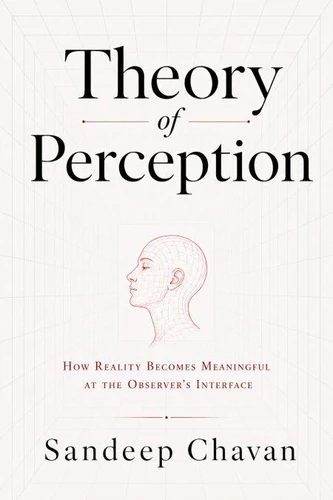
Theory of Perception
Physical reality exists independently of the observer. Yet the world as experienced never arrives directly, completely, or instantaneously. Theory of Perception: How Reality Becomes Meaningful at the Observer's Interface presents an original framework for understanding how consequences from physical and bodily reality cross boundaries, reach alignment thresholds, become sensory activity, form coherent perceptual structures, activate memory, enter interpretation, and eventually acquire meaning.
Drawing upon Universal Energy Dynamics, Sandeep J. Chavan develops a structural sequence beginning with Still Structured Vacuum Energy, Delta, Ripple, and Manifestation. The inquiry then moves through interaction, consequence, boundary, Alignment Threshold Time, sensation, perception, coherence, memory, interpretation, meaning, experienced time, the observer-relative universe, shared objectivity, and correction.
The book rejects two opposing extremes. Reality is not a finished picture copied directly into the mind, but neither is it created by consciousness. The observer participates in a later relational consequence of events that already possess physical existence. Perception is presented as the organization of distributed consequences into stable experiential form. Memory is defined as retained consequence rather than passive storage.
Interpretation emerges through the relation between present perceptual structure and the observer's history, language, context, identity, and expectation. Meaning begins when a resolved relation changes what the observer can understand, remember, expect, choose, or do next. A major case study compares a person blind since birth, a person who becomes blind after visual maturity, and a sighted person.
Their experiences of space, movement, distance, form, colour, memory, and landscape differ, yet all remain grounded in one physical reality. This distinction allows the book to define the observer-relative universe without dividing reality into separate subjective worlds. The manuscript also examines sensory transduction, neural signaling, predictive processing, attention, multisensory integration, quantum measurement, artificial systems, machine perception, scientific instruments, illusion, objectivity, and correction through additional consequence.
The central claim is simple but far-reaching:Reality does not wait for an observer. But universe begins wherever reality becomes meaningfully related. Written for readers of physics, philosophy, neuroscience, consciousness studies, cognitive science, artificial intelligence, and epistemology, Theory of Perception offers a disciplined bridge between physical realism and relational experience.
Drawing upon Universal Energy Dynamics, Sandeep J. Chavan develops a structural sequence beginning with Still Structured Vacuum Energy, Delta, Ripple, and Manifestation. The inquiry then moves through interaction, consequence, boundary, Alignment Threshold Time, sensation, perception, coherence, memory, interpretation, meaning, experienced time, the observer-relative universe, shared objectivity, and correction.
The book rejects two opposing extremes. Reality is not a finished picture copied directly into the mind, but neither is it created by consciousness. The observer participates in a later relational consequence of events that already possess physical existence. Perception is presented as the organization of distributed consequences into stable experiential form. Memory is defined as retained consequence rather than passive storage.
Interpretation emerges through the relation between present perceptual structure and the observer's history, language, context, identity, and expectation. Meaning begins when a resolved relation changes what the observer can understand, remember, expect, choose, or do next. A major case study compares a person blind since birth, a person who becomes blind after visual maturity, and a sighted person.
Their experiences of space, movement, distance, form, colour, memory, and landscape differ, yet all remain grounded in one physical reality. This distinction allows the book to define the observer-relative universe without dividing reality into separate subjective worlds. The manuscript also examines sensory transduction, neural signaling, predictive processing, attention, multisensory integration, quantum measurement, artificial systems, machine perception, scientific instruments, illusion, objectivity, and correction through additional consequence.
The central claim is simple but far-reaching:Reality does not wait for an observer. But universe begins wherever reality becomes meaningfully related. Written for readers of physics, philosophy, neuroscience, consciousness studies, cognitive science, artificial intelligence, and epistemology, Theory of Perception offers a disciplined bridge between physical realism and relational experience.
Les livres de SANDEEP CHAVAN



21,49 €
The Game of R’s
E-book
21,49 €

21,49 €
17,49 €

The Resistance Paradox
E-book
21,49 €

The Power of Being Okay
E-book
21,49 €

16,99 €

17,49 €

17,49 €
34,49 €
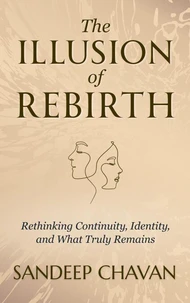
The Illusion of Rebirth
E-book
21,49 €

You Are Never Alone
E-book
21,49 €
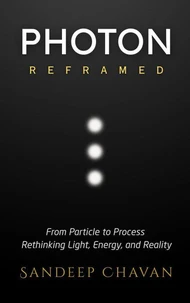
Photon Reframed
E-book
17,49 €
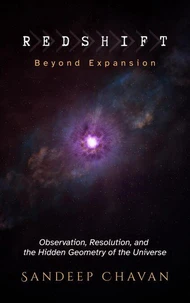
29,99 €