

A militant of Inclusive Education and Global Democracy, Giovanni Pampanini (Palermo, Italy, 1957) delivered roughly one hundred University courses, seminars, lectures, and conferences on these matters from 1980 to 2016 in different countries. The 2005-2007 vice president of the World Council of Comparative Education Societies, he is the recipient of the 2008 Honorary Citizenship of Bahia Blanca, Argentina for his cultural merits and the 2014/2015 Asolapo/UNESCO Prize for Peace Education.
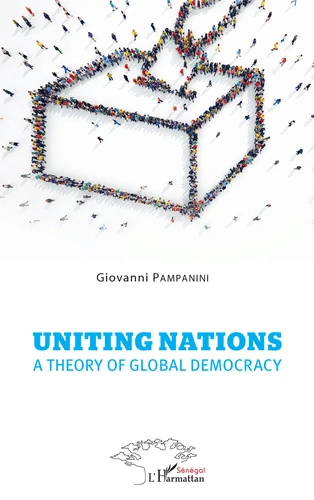
Uniting Nations. A theory of global democracy
Par :Formats :
- Paiement en ligne :
- Livraison à domicile ou en point Mondial Relay estimée à partir du 8 octobreCet article sera commandé chez un fournisseur et vous sera envoyé 22 jours après la date de votre commande.
- Retrait Click and Collect en magasin gratuit
- Réservation en ligne avec paiement en magasin :
- Indisponible pour réserver et payer en magasin
- Nombre de pages226
- FormatGrand Format
- PrésentationBroché
- Poids0.279 kg
- Dimensions13,5 cm × 21,5 cm × 0,1 cm
- ISBN978-2-343-17345-0
- EAN9782343173450
- Date de parution06/09/2019
- ÉditeurL'Harmattan
Résumé
This book introduces a Theory of Global Democracy as a tool to implement the capacity to study today's International Relations through new lenses, different from those of the main theories of this field, that are Neo-realism, Liberalism, "English School", and Centre/Periphery. The principal concern of this new Theory is the difference albeit the opposition between the national dimension and the international dimension of democracy.
Based on a philosophical research about the theories of democracy, the book investigates, through an analysis of historical and current events, what is wrong, but implicit, in the national theories of democracy. Thanks to a comparative approach to Geo-politics, the research contained in the book illustrates the need for new principles and indicators which account for the democratization blockade. From a strict scientific point of view, the Global Democracy Theory is of help to understand how such a blockade works, so that the elaboration of a Global Democracy Index using its principles and indicators is yet required.
For all these reasons, the book is especially useful to those who study International Relations, Political Science, and Political Philosophy.
Based on a philosophical research about the theories of democracy, the book investigates, through an analysis of historical and current events, what is wrong, but implicit, in the national theories of democracy. Thanks to a comparative approach to Geo-politics, the research contained in the book illustrates the need for new principles and indicators which account for the democratization blockade. From a strict scientific point of view, the Global Democracy Theory is of help to understand how such a blockade works, so that the elaboration of a Global Democracy Index using its principles and indicators is yet required.
For all these reasons, the book is especially useful to those who study International Relations, Political Science, and Political Philosophy.
A propos de Giovanni Pampanini

28,00 €

18,99 €