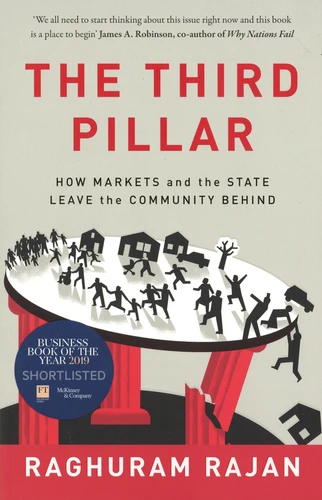
From one of the most important economic thinkers of our time, an agenda-setting analysis of globalisation, and how the neglected power of community could revive global markets and democracy for the good of all. Right now, we're doing things wrong. As markets scale up, government scales up with it, concentrating economic and political power and leaving everything on the periphery to rot. It's what happens when the relationship between the economy and the state is prioritised, with social issues left out of the equation.
In a masterpiece of authoritative, farseeing explication, Raghuram Rajan explains how corporate monopoly and misbehaviour became empowered, what the social and economic consequences are of globalisation, and how we can boost the third, currently missing pillar : society. Communities must become important again, and decision-making must be watered at the grass roots, or our democracy and markets will continue to wither.
From one of the most important economic thinkers of our time, an agenda-setting analysis of globalisation, and how the neglected power of community could revive global markets and democracy for the good of all. Right now, we're doing things wrong. As markets scale up, government scales up with it, concentrating economic and political power and leaving everything on the periphery to rot. It's what happens when the relationship between the economy and the state is prioritised, with social issues left out of the equation.
In a masterpiece of authoritative, farseeing explication, Raghuram Rajan explains how corporate monopoly and misbehaviour became empowered, what the social and economic consequences are of globalisation, and how we can boost the third, currently missing pillar : society. Communities must become important again, and decision-making must be watered at the grass roots, or our democracy and markets will continue to wither.