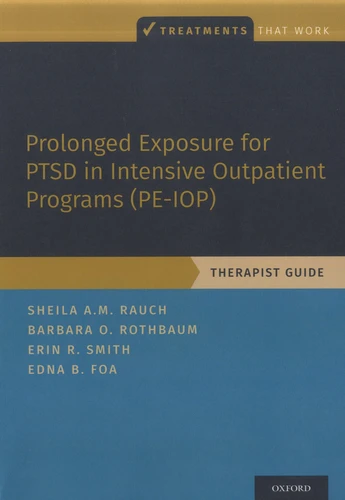
Prolonged Exposure for PTSD in Intensive Outpatient Programs (PE-IOP) presents an innovative PTSD treatment model for the use of prolonged exposure (PE) in residential and intensive outpatient programs, which increases access to care and retention in care while providing transformational symptom outcomes. Drs. Rauch, Rothbaum, Smith, and Foa present the elements of the PE protocol along with all the logistics for how to provide PE in an intensive outpatient program.
PE is the most widely studied treatment for PTSD, with over 100 studies showing its efficacy for PTSD and comorbid patient populations—from single-incident and multiple-incident traumas of all types (e.g., combat, sexual assault, etc.). Variations and considerations for implementation are presented to allow providers designing programs to consider what best fits their patient population and setting.
Patient and provider forms are included for use. As leaders in clinical practice, training, and research in the field of PTSD treatment, Drs. Rauch, Rothbaum, Smith, and Foa provide concise but thorough descriptions of the key components of the program, how to implement them, and when and how to consider adaptations.
Prolonged Exposure for PTSD in Intensive Outpatient Programs (PE-IOP) presents an innovative PTSD treatment model for the use of prolonged exposure (PE) in residential and intensive outpatient programs, which increases access to care and retention in care while providing transformational symptom outcomes. Drs. Rauch, Rothbaum, Smith, and Foa present the elements of the PE protocol along with all the logistics for how to provide PE in an intensive outpatient program.
PE is the most widely studied treatment for PTSD, with over 100 studies showing its efficacy for PTSD and comorbid patient populations—from single-incident and multiple-incident traumas of all types (e.g., combat, sexual assault, etc.). Variations and considerations for implementation are presented to allow providers designing programs to consider what best fits their patient population and setting.
Patient and provider forms are included for use. As leaders in clinical practice, training, and research in the field of PTSD treatment, Drs. Rauch, Rothbaum, Smith, and Foa provide concise but thorough descriptions of the key components of the program, how to implement them, and when and how to consider adaptations.