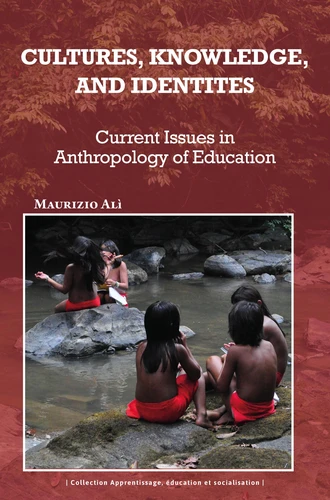
This essay aims to rethink, from an anthropological perspective, key analytical categories that are part of the theoretical toolkit of researchers and practitioners in education and training : culture, identity and heritage. Education, in its simplest form, is a process of knowledge transmission : a dynamic that encompasses our nature as Homo sapiens, our belonging to a social community, and our cultural identity.
How do these different levels intertwine and interact ? This essay aims to answer these crucial questions by proposing a conceptual framework for rethinking key notions (culture, academic knowledge, identity, ethnicity, indigeneity, and multiculturalism) while critically examining the theories and schools of thought through which education is investigated as a social phenomenon. The chosen transdisciplinary approach fosters a multifaceted dialogue between socio-anthropological disciplines, educational sciences, and political science, with the ambition of relativizing and deconstructing the numerous stereotypes and prejudices associated with otherness in education and the supposed superiority or inferiority of certain educational systems.
This essay aims to rethink, from an anthropological perspective, key analytical categories that are part of the theoretical toolkit of researchers and practitioners in education and training : culture, identity and heritage. Education, in its simplest form, is a process of knowledge transmission : a dynamic that encompasses our nature as Homo sapiens, our belonging to a social community, and our cultural identity.
How do these different levels intertwine and interact ? This essay aims to answer these crucial questions by proposing a conceptual framework for rethinking key notions (culture, academic knowledge, identity, ethnicity, indigeneity, and multiculturalism) while critically examining the theories and schools of thought through which education is investigated as a social phenomenon. The chosen transdisciplinary approach fosters a multifaceted dialogue between socio-anthropological disciplines, educational sciences, and political science, with the ambition of relativizing and deconstructing the numerous stereotypes and prejudices associated with otherness in education and the supposed superiority or inferiority of certain educational systems.