

Anne-Sophie Crosetti is a sociologist whose research interests lie at the intersection of gender studies, Catholicism, and social movements. She defended her PhD at the Université libre de Bruxelles in 2020 before conducting a sociohisterical study of "pro-life' movements (WB7, FNRS). Juliette Masquelier is a historian of contemporary Catholicism, which she studies through a gender lens. After her doctoral thesis (ULB, 2019), she obtained various postdoctoral mandates in Brussels, Antwerp and Paris (FNRS, BELSPO, MSCA), to explore the question of women's commitment, whether denominational, social or political.
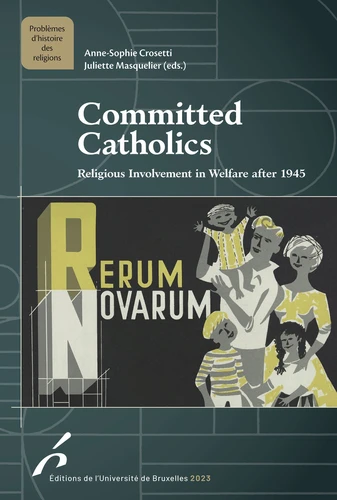
Committed Catholics. Religious Involvement in Welfare after 1945
Par : ,Formats :
- Paiement en ligne :
- Livraison à domicile ou en point Mondial Relay estimée à partir du 17 septembreCet article sera commandé chez un fournisseur et vous sera envoyé 10 jours après la date de votre commande.
- Retrait Click and Collect en magasin gratuit
- Réservation en ligne avec paiement en magasin :
- Indisponible pour réserver et payer en magasin
- Nombre de pages254
- FormatGrand Format
- PrésentationBroché
- Poids0.51 kg
- Dimensions16,0 cm × 24,0 cm × 1,4 cm
- ISBN978-2-8004-1934-3
- EAN9782800419343
- Date de parution12/02/2026
- CollectionProblèmes d'histoire des relig
- ÉditeurUniversité de Bruxelles
Résumé
The construction of European welfare states after 1945 did not happen without reaction and contribution from private religious actors. Rather than leading to the disappearance of Catholic charities, these developments have led Catholic actors to adapt to a new range of methods, new needs, new audiences, and new sources of funding - as well as to new spiritual incentives and religious meanings attached to commitment.
This issue explores the new forms of Catholic social commitment in the post-war period, from the perspective of the actors involved. Through case studies from several national contexts and different sectors of healthcare, social services and education, it highlights the coexistence of variety of actors - charities, public and private parties, lay and religious, men and women, professionals, activists and volunteers- and multiple strategies for articulating religious values in welfare work.
Addressing major transformations such as secularisation, and the profesnalisation of assistance, this collection of articles complicates the binary oppositions between charity and activism, between professionals and volunteers, in order to highlight the various forms of religious commitment that Flourished in Catholic welfare and contributed to the profound changes in society in the second half of the twentieth century.
This issue explores the new forms of Catholic social commitment in the post-war period, from the perspective of the actors involved. Through case studies from several national contexts and different sectors of healthcare, social services and education, it highlights the coexistence of variety of actors - charities, public and private parties, lay and religious, men and women, professionals, activists and volunteers- and multiple strategies for articulating religious values in welfare work.
Addressing major transformations such as secularisation, and the profesnalisation of assistance, this collection of articles complicates the binary oppositions between charity and activism, between professionals and volunteers, in order to highlight the various forms of religious commitment that Flourished in Catholic welfare and contributed to the profound changes in society in the second half of the twentieth century.
A propos de Anne-Sophie Crosetti
No children, no cry
E-book
14,99 €

Sextant N° 36
No children, no cry
Grand Format
22,00 €