OFFRE LISEUSES
Une liseuse achetée = une housse offerte* jusqu'au 21 juin
- Accueil /
- Juliette Masquelier
Juliette Masquelier

Dernière sortie
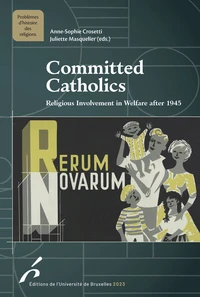
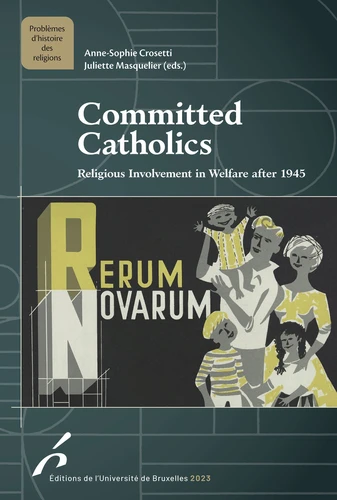
Committed Catholics
The construction of European welfare states after 1945 did not happen without reaction and contribution from private religious actors. Rather than leading to the disappearance of Catholic charities, these developments have led Catholic actors to adapt to a new range of methods, new needs, new audiences, and new sources of funding - as well as to new spiritual incentives and religious meanings attached to commitment.
This issue explores the new forms of Catholic social commitment in the post-war period, from the perspective of the actors involved. Through case studies from several national contexts and different sectors of healthcare, social services and education, it highlights the coexistence of variety of actors - charities, public and private parties, lay and religious, men and women, professionals, activists and volunteers- and multiple strategies for articulating religious values in welfare work.
Addressing major transformations such as secularisation, and the profesnalisation of assistance, this collection of articles complicates the binary oppositions between charity and activism, between professionals and volunteers, in order to highlight the various forms of religious commitment that Flourished in Catholic welfare and contributed to the profound changes in society in the second half of the twentieth century.
This issue explores the new forms of Catholic social commitment in the post-war period, from the perspective of the actors involved. Through case studies from several national contexts and different sectors of healthcare, social services and education, it highlights the coexistence of variety of actors - charities, public and private parties, lay and religious, men and women, professionals, activists and volunteers- and multiple strategies for articulating religious values in welfare work.
Addressing major transformations such as secularisation, and the profesnalisation of assistance, this collection of articles complicates the binary oppositions between charity and activism, between professionals and volunteers, in order to highlight the various forms of religious commitment that Flourished in Catholic welfare and contributed to the profound changes in society in the second half of the twentieth century.
The construction of European welfare states after 1945 did not happen without reaction and contribution from private religious actors. Rather than leading to the disappearance of Catholic charities, these developments have led Catholic actors to adapt to a new range of methods, new needs, new audiences, and new sources of funding - as well as to new spiritual incentives and religious meanings attached to commitment.
This issue explores the new forms of Catholic social commitment in the post-war period, from the perspective of the actors involved. Through case studies from several national contexts and different sectors of healthcare, social services and education, it highlights the coexistence of variety of actors - charities, public and private parties, lay and religious, men and women, professionals, activists and volunteers- and multiple strategies for articulating religious values in welfare work.
Addressing major transformations such as secularisation, and the profesnalisation of assistance, this collection of articles complicates the binary oppositions between charity and activism, between professionals and volunteers, in order to highlight the various forms of religious commitment that Flourished in Catholic welfare and contributed to the profound changes in society in the second half of the twentieth century.
This issue explores the new forms of Catholic social commitment in the post-war period, from the perspective of the actors involved. Through case studies from several national contexts and different sectors of healthcare, social services and education, it highlights the coexistence of variety of actors - charities, public and private parties, lay and religious, men and women, professionals, activists and volunteers- and multiple strategies for articulating religious values in welfare work.
Addressing major transformations such as secularisation, and the profesnalisation of assistance, this collection of articles complicates the binary oppositions between charity and activism, between professionals and volunteers, in order to highlight the various forms of religious commitment that Flourished in Catholic welfare and contributed to the profound changes in society in the second half of the twentieth century.
Les livres de Juliette Masquelier


Committed Catholics. Religious Involvement in Welfare after 1945
Anne-Sophie Crosetti, Juliette Masquelier
Grand Format
28,00 €

Femmmes catholiques en mouvements. Action catholique et emancipation feminime en belgique francophone (1955-1990)
Juliette Masquelier
Grand Format
25,00 €

Nouvelles Questions Féministes Volume 38, N°1/2019
Féministes religieux. Spiritualités féministes
Lisa Anteby-Yemini, Béatrice de Gasquet, Elyse Goldstein, Malika Hamidi, Juliette Masquelier, Ma Roy
Grand Format
25,00 €