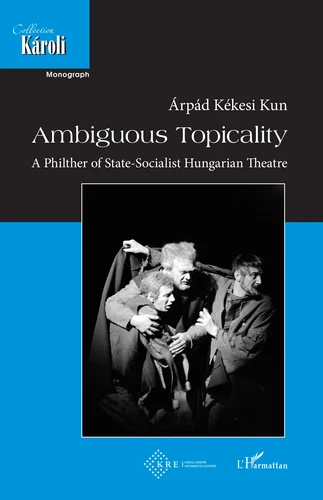
Ambiguous Topicality. A philter of state-socialist hungarian theatre
Par :Formats :
- Nombre de pages212
- PrésentationBroché
- Poids0.329 kg
- Dimensions15,5 cm × 24,0 cm × 1,2 cm
- ISBN978-2-343-23031-3
- EAN9782343230313
- Date de parution01/01/2021
- CollectionHarmattan Hongrie
- ÉditeurL'Harmattan
Résumé
This monograph examines the Hungarian theatre between 1949 and 1989 and uses Philther as the method of writing theatre history. In line with the Philther categories, the twelve performance analyses comprise six units : the context of the performance in theatre culture ; dramatic text and dramaturgy ; staging ; acting ; stage design and sound ; the impact and posterity. They focus on the beginning, middle and end of state socialism through the productions of three different theatres.
The first four chapters examine shows of the Operetta Theatre in Budapest immediately following the nationalization of cultural institutions. The next six chapters deal with performances of the National Theatre during the consolidation of the Kádár regime, and the last two chapters present productions of the Katona József Theatre shortly before the regime change. They all address the question of topicality, the adaptation of stories to contemporary expectations, which often involved the emergence of ambiguity and the involuntary shift of interpreting stage events in the light of the spectactors own situation.
The first four chapters examine shows of the Operetta Theatre in Budapest immediately following the nationalization of cultural institutions. The next six chapters deal with performances of the National Theatre during the consolidation of the Kádár regime, and the last two chapters present productions of the Katona József Theatre shortly before the regime change. They all address the question of topicality, the adaptation of stories to contemporary expectations, which often involved the emergence of ambiguity and the involuntary shift of interpreting stage events in the light of the spectactors own situation.