
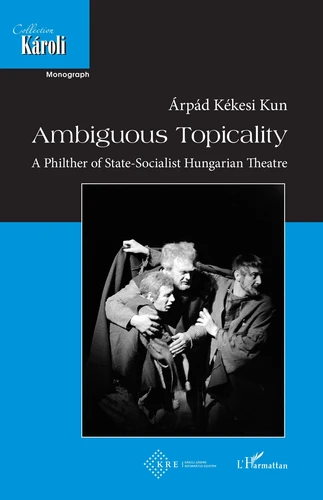
Ambiguous Topicality. A philter of state-socialist hungarian theatre
Par :Formats :
Disponible dans votre compte client Decitre ou Furet du Nord dès validation de votre commande. Le format PDF est :
- Compatible avec une lecture sur My Vivlio (smartphone, tablette, ordinateur)
- Compatible avec une lecture sur liseuses Vivlio
- Pour les liseuses autres que Vivlio, vous devez utiliser le logiciel Adobe Digital Edition. Non compatible avec la lecture sur les liseuses Kindle, Remarkable et Sony
 , qui est-ce ?
Notre partenaire de plateforme de lecture numérique où vous retrouverez l'ensemble de vos ebooks gratuitement
Pour en savoir plus sur nos ebooks, consultez notre aide en ligne ici
C'est si simple ! Lisez votre ebook avec l'app Vivlio sur votre tablette, mobile ou ordinateur :

- Nombre de pages216
- FormatPDF
- ISBN978-2-14-023991-5
- EAN9782140239915
- Date de parution04/10/2025
- Protection num.Digital Watermarking
- Taille3 Mo
- Infos supplémentairespdf
- ÉditeurL'Harmattan
Résumé
This monograph examines the Hungarian theatre between 1949 and1989 and uses Philther as the method of writing theatre history. In linewith the Philther categories, the twelve performance analyses comprisesix units: the context of the performance in theatre culture; dramatic textand dramaturgy; staging; acting; stage design and sound; the impactand posterity. They focus on the beginning, middle and end of statesocialism through the productions of three different theatres.
The first fourchapters examine shows of the Operetta Theatre in Budapest immediatelyfollowing the nationalization of cultural institutions. The next six chaptersdeal with performances of the National Theatre during the consolidationof the Kádár regime, and the last two chapters present productions of theKatona József Theatre shortly before the regime change. They all addressthe question of topicality, the adaptation of stories to contemporaryexpectations, which often involved the emergence of ambiguity and theinvoluntary shift of interpreting stage events in the light of the spectactors own situation.
The first fourchapters examine shows of the Operetta Theatre in Budapest immediatelyfollowing the nationalization of cultural institutions. The next six chaptersdeal with performances of the National Theatre during the consolidationof the Kádár regime, and the last two chapters present productions of theKatona József Theatre shortly before the regime change. They all addressthe question of topicality, the adaptation of stories to contemporaryexpectations, which often involved the emergence of ambiguity and theinvoluntary shift of interpreting stage events in the light of the spectactors own situation.