

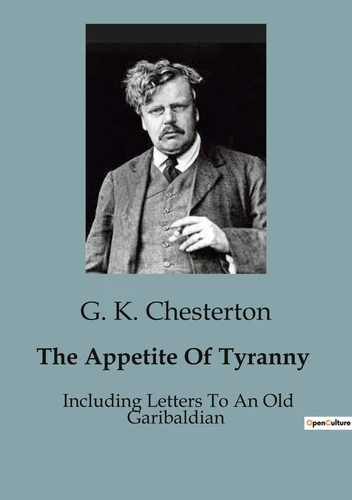
The Appetite Of Tyranny. The Ideological Conflict and Moral Paradoxes of Prussian Militarism
Par :Formats :
- Paiement en ligne :
- Livraison à domicile ou en point Mondial Relay estimée à partir du 17 septembreCet article sera commandé chez un fournisseur et vous sera envoyé 21 jours après la date de votre commande.
- Retrait Click and Collect en magasin gratuit
- Nombre de pages36
- PrésentationBroché
- Poids0.062 kg
- Dimensions14,8 cm × 21,0 cm × 0,2 cm
- ISBN979-10-418-1791-7
- EAN9791041817917
- Date de parution25/06/2023
- ÉditeurCulturea
Résumé
Texte corrigé : "The Appetite of Tyranny" by G. K. Chesterton is a critical examination of the ideological and moral underpinnings of Prussian militarism during World War I. Chesterton argues that Prussian militarism represents a developmental form of barbarism, not due to a lack of civilization, but because of its active hostility towards fundamental human ideas such as honor, reciprocity, and the sanctity of promises.
He contrasts this with the Russian Empire, which, despite its own flaws, has historically resisted Eastern barbarism and supported the liberation of smaller nations. Chesterton critiques the German perspective, which he sees as a dangerous blend of opportunism and a refusal to engage in mutual respect or equality. He highlights the inconsistency in German rhetoric, particularly in their claims of racial superiority and their contradictory actions, such as allying with non-Teutonic powers when convenient.
The text delves into the philosophical and ethical contradictions within German policy and thought, emphasizing the threat they pose to European civilization. Chesterton's work is a call to recognize and resist the ideological dangers of Prussian militarism, advocating for a defense of the principles that underpin civilized society.
He contrasts this with the Russian Empire, which, despite its own flaws, has historically resisted Eastern barbarism and supported the liberation of smaller nations. Chesterton critiques the German perspective, which he sees as a dangerous blend of opportunism and a refusal to engage in mutual respect or equality. He highlights the inconsistency in German rhetoric, particularly in their claims of racial superiority and their contradictory actions, such as allying with non-Teutonic powers when convenient.
The text delves into the philosophical and ethical contradictions within German policy and thought, emphasizing the threat they pose to European civilization. Chesterton's work is a call to recognize and resist the ideological dangers of Prussian militarism, advocating for a defense of the principles that underpin civilized society.
A propos de G. K. Chesterton


0,99 €
0,99 €

0,99 €
4,99 €

Le bœuf muet
E-book
3,49 €
4,99 €
4,99 €
4,99 €
1,99 €

Le Nommé Jeudi
E-book
0,99 €

4,99 €

L'osteria volante
E-book
5,99 €

5,99 €

2,99 €

5,99 €

B. J. Harrison Reads The Queer Feet
Audiobook
5,99 €