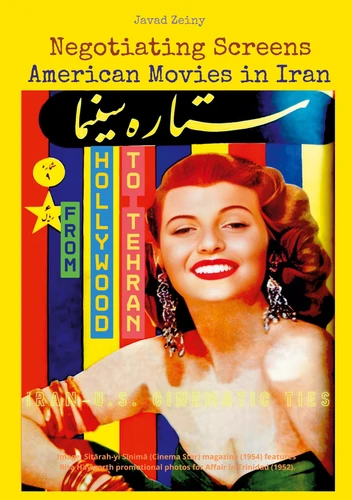
Negotiating Screens offers the first archive-driven account of American cinema's presence in Iran, spanning the period from 1925 to the present day. Moving beyond diplomatic history, the book examines film as a contested site of cultural diplomacy, economic warfare, and national identity formation. The book demonstrates how U. S. agencies such as the United States Information Agency (USIA) used mobile cinemas and training programs to promote Cold War loyalties, inadvertently acclimating Iranian audiences to Hollywood narrative forms.
The author uncovers systematic economic coercion, including MGM-led predatory pricing and tariff manipulation, designed to suppress Iran's nascent film industry. The book then traces how Iranian directors selectively drew on 1960s Hollywood (Lumet, Schatzberg, Kazan) while infusing these forms with religious iconography and the working-class geography of Tehran. This process produced a distinctive Iranianized genre cinema that sustained popular appeal despite state censorship and Hollywood dominance.
Drawing on Persian-language newspapers, film magazines, and oral histories, J. Zeiny reconstructs audience reception and industrial practices from below. The book also examines the gender politics of representation and the post-revolutionary ban that inadvertently catalyzed an internationally acclaimed art cinema while erasing popular film-farsi from official memory.
Negotiating Screens offers the first archive-driven account of American cinema's presence in Iran, spanning the period from 1925 to the present day. Moving beyond diplomatic history, the book examines film as a contested site of cultural diplomacy, economic warfare, and national identity formation. The book demonstrates how U. S. agencies such as the United States Information Agency (USIA) used mobile cinemas and training programs to promote Cold War loyalties, inadvertently acclimating Iranian audiences to Hollywood narrative forms.
The author uncovers systematic economic coercion, including MGM-led predatory pricing and tariff manipulation, designed to suppress Iran's nascent film industry. The book then traces how Iranian directors selectively drew on 1960s Hollywood (Lumet, Schatzberg, Kazan) while infusing these forms with religious iconography and the working-class geography of Tehran. This process produced a distinctive Iranianized genre cinema that sustained popular appeal despite state censorship and Hollywood dominance.
Drawing on Persian-language newspapers, film magazines, and oral histories, J. Zeiny reconstructs audience reception and industrial practices from below. The book also examines the gender politics of representation and the post-revolutionary ban that inadvertently catalyzed an internationally acclaimed art cinema while erasing popular film-farsi from official memory.