


Dr. Javad Zeiny is a scholar, filmmaker, and curator specializing in film studies. He teaches at several universities in France and Switzerland and holds degrees from the University of Fribourg (Switzerland), Concordia University (Canada), and Universite Paris Cite (France). His research focuses on the histories, theories, and transnational trajectories of Iranian, Canadian, and U. S. cinema and media.
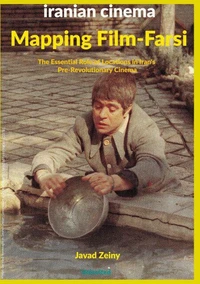
He has a particular interest in underexplored film traditions, including pre-revolutionary Iranian popular cinema (Film-Farsi), as well as French-language and diasporic cinemas. He is the author of seven books, including Iranian Cinema: A National Cinema Under Influences (1900-1978: Before the Revolution) (2015) and Mapping Film-Farsi: The Essential Role of Locations in Iran's Pre-Revolutionary Cinema (2025), which examines the spatial and cultural dimensions of Iranian popular film.
In addition, he has published numerous articles and essays in academic journals and cultural magazines in Canada, France, and Iran. As a filmmaker, his works have been screened and broadcast internationally. For more than two decades, he has served as artistic director of the Uninvited Film Festival in Paris, an independent platform devoted to the exhibition of alternative and historically underrepresented cinemas.
He is also affiliated with international research initiatives such as Archive/Counter-Archive (York University, Canada) and Cinema Iranica (University of Toronto, Canada).
He has a particular interest in underexplored film traditions, including pre-revolutionary Iranian popular cinema (Film-Farsi), as well as French-language and diasporic cinemas. He is the author of seven books, including Iranian Cinema: A National Cinema Under Influences (1900-1978: Before the Revolution) (2015) and Mapping Film-Farsi: The Essential Role of Locations in Iran's Pre-Revolutionary Cinema (2025), which examines the spatial and cultural dimensions of Iranian popular film.
In addition, he has published numerous articles and essays in academic journals and cultural magazines in Canada, France, and Iran. As a filmmaker, his works have been screened and broadcast internationally. For more than two decades, he has served as artistic director of the Uninvited Film Festival in Paris, an independent platform devoted to the exhibition of alternative and historically underrepresented cinemas.
He is also affiliated with international research initiatives such as Archive/Counter-Archive (York University, Canada) and Cinema Iranica (University of Toronto, Canada).