
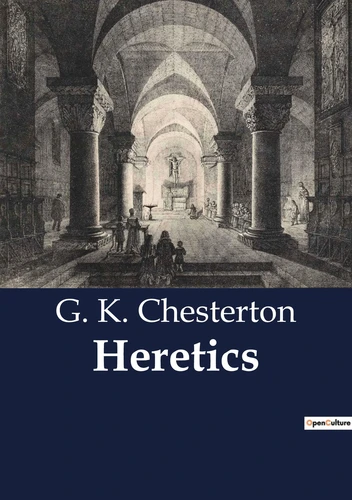
Heretics. Exploring the Paradoxes of Modern Thought and Orthodoxy
Par :Formats :
- Paiement en ligne :
- Livraison à domicile ou en point Mondial Relay estimée à partir du 9 septembreCet article sera commandé chez un fournisseur et vous sera envoyé 21 jours après la date de votre commande.
- Retrait Click and Collect en magasin gratuit
- Réservation en ligne avec paiement en magasin :
- Indisponible pour réserver et payer en magasin
- Nombre de pages216
- PrésentationBroché
- Poids0.286 kg
- Dimensions14,8 cm × 21,0 cm × 1,2 cm
- ISBN979-10-418-0177-0
- EAN9791041801770
- Date de parution03/07/2023
- ÉditeurCulturea
Résumé
"Heretics" by G. K. Chesterton is a critical examination of the prevailing philosophies and ideologies of the early 20th century. Chesterton challenges the modern dismissal of orthodoxy and the celebration of heresy, arguing that the latter has become synonymous with being clear-headed and courageous, while orthodoxy is seen as outdated and wrong. He critiques the modern tendency to avoid discussing fundamental truths and the nature of the universe, suggesting that this avoidance leads to a lack of genuine progress and understanding.
Chesterton emphasizes the importance of having a coherent philosophy or religion, as it shapes one's view of the universe and influences practical affairs. He critiques various contemporary figures, such as Rudyard Kipling and Bernard Shaw, for their philosophical stances, which he views as incomplete or misguided. Chesterton argues for a return to fundamental principles and a recognition of the importance of orthodoxy in providing a stable foundation for thought and action.
Through his exploration of topics like militarism, cosmopolitanism, and the role of art and literature, Chesterton advocates for a deeper engagement with philosophical and religious truths, suggesting that true progress and understanding can only be achieved through such engagement.
Chesterton emphasizes the importance of having a coherent philosophy or religion, as it shapes one's view of the universe and influences practical affairs. He critiques various contemporary figures, such as Rudyard Kipling and Bernard Shaw, for their philosophical stances, which he views as incomplete or misguided. Chesterton argues for a return to fundamental principles and a recognition of the importance of orthodoxy in providing a stable foundation for thought and action.
Through his exploration of topics like militarism, cosmopolitanism, and the role of art and literature, Chesterton advocates for a deeper engagement with philosophical and religious truths, suggesting that true progress and understanding can only be achieved through such engagement.
A propos de G. K. Chesterton

0,99 €
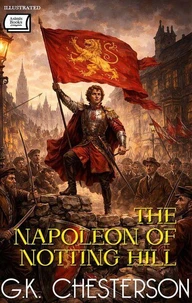
0,99 €

0,99 €
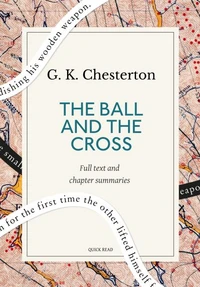
4,99 €
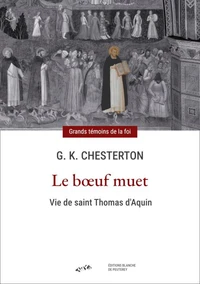
Le bœuf muet
E-book
3,49 €
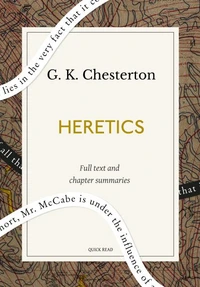
4,99 €
4,99 €
4,99 €
1,99 €

Le Nommé Jeudi
E-book
0,99 €

4,99 €

L'osteria volante
E-book
5,99 €
5,99 €

2,99 €


5,99 €