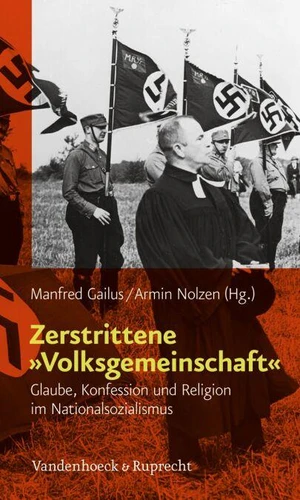
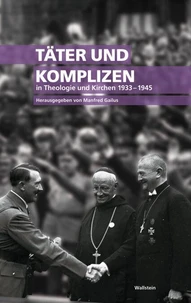
In 1933 more than 95% of the German population were members of one of the two major Christian religions. This picture did not change dramatically throughout the entire 12-year reign of the "Third Reich." This is all the more surprising in light of the fact that at the same time a large proportion of the German population also belonged to some Nazi organization. Apparently during this period, on some intellectual-religious level, these two irreconcilable roles of being a politically devout National Socialist and a conventional Christian were able to coexist side by side.
This volume examines which forms this coexistence took on, the changes it experienced and the conflicts it created. It also explores the question whether the religious situation of that day and age can be reduced solely to a "struggle between Church and State" of the two major religious faiths.
In 1933 more than 95% of the German population were members of one of the two major Christian religions. This picture did not change dramatically throughout the entire 12-year reign of the "Third Reich." This is all the more surprising in light of the fact that at the same time a large proportion of the German population also belonged to some Nazi organization. Apparently during this period, on some intellectual-religious level, these two irreconcilable roles of being a politically devout National Socialist and a conventional Christian were able to coexist side by side.
This volume examines which forms this coexistence took on, the changes it experienced and the conflicts it created. It also explores the question whether the religious situation of that day and age can be reduced solely to a "struggle between Church and State" of the two major religious faiths.