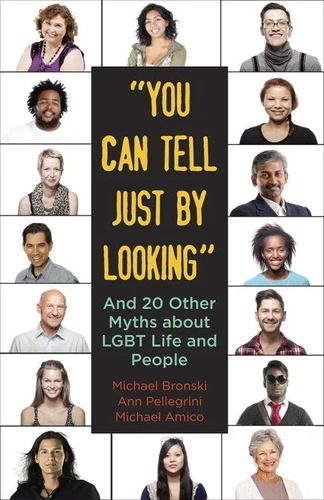
2014 Lambda Literary Award Finalist: LGBT NonfictionBreaks down the most commonly held misconceptions about lesbian, gay, bisexual, and transgender people and their lives In "You Can Tell Just by Looking" three scholars and activists come together to unpack enduring, popular, and deeply held myths about lesbian, gay, bisexual, and transgender people, culture, and life in America. Myths, such as "All Religions Condemn Homosexuality" and "Transgender People Are Mentally Ill, " have been used to justify discrimination and oppression of LGBT people.
Others, such as "Homosexuals Are Born That Way, " have been embraced by LGBT communities and their allies. In discussing and dispelling these myths-including gay-positive ones-the authors challenge readers to question their own beliefs and to grapple with the complexities of what it means to be queer in the broadest social, political, and cultural sense.
2014 Lambda Literary Award Finalist: LGBT NonfictionBreaks down the most commonly held misconceptions about lesbian, gay, bisexual, and transgender people and their lives In "You Can Tell Just by Looking" three scholars and activists come together to unpack enduring, popular, and deeply held myths about lesbian, gay, bisexual, and transgender people, culture, and life in America. Myths, such as "All Religions Condemn Homosexuality" and "Transgender People Are Mentally Ill, " have been used to justify discrimination and oppression of LGBT people.
Others, such as "Homosexuals Are Born That Way, " have been embraced by LGBT communities and their allies. In discussing and dispelling these myths-including gay-positive ones-the authors challenge readers to question their own beliefs and to grapple with the complexities of what it means to be queer in the broadest social, political, and cultural sense.

 , qui est-ce ?