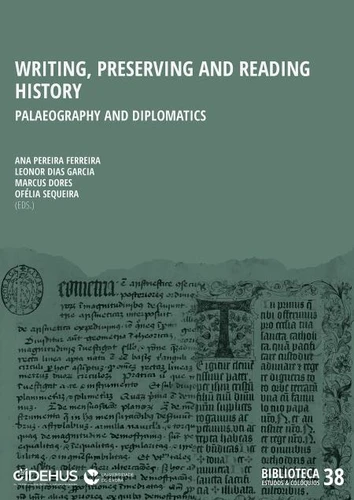
Writing, preserving and reading History. Palaeography and Diplomatics
Par : , , ,Formats :
Disponible dans votre compte client Decitre ou Furet du Nord dès validation de votre commande. Le format Multi-format est :
- Pour les liseuses autres que Vivlio, vous devez utiliser le logiciel Adobe Digital Edition. Non compatible avec la lecture sur les liseuses Kindle, Remarkable et Sony
 , qui est-ce ?
Notre partenaire de plateforme de lecture numérique où vous retrouverez l'ensemble de vos ebooks gratuitement
Pour en savoir plus sur nos ebooks, consultez notre aide en ligne ici
C'est si simple ! Lisez votre ebook avec l'app Vivlio sur votre tablette, mobile ou ordinateur :

- FormatMulti-format
- ISBN978-972-778-488-2
- EAN9789727784882
- Date de parution02/10/2025
- Protection num.pas de protection
- Infos supplémentairesMulti-Format
- ÉditeurPublicações do Cidehus
Résumé
Palaeography and Diplomatics are now central to History and Philology. This science offers a more empirical approach to History. Its importance reaches into Codicology, Onomastics, and Genealogy. The study of writing is essential to understanding historical processes. However, we must question the scope and limits of the study of writing. Should we treat aesthetic and ceremonial details as true reflections of complex histories? Is assigning symbolic meaning to graphic features objective or just based on assumptions? Can calligraphy trends show us social shifts? Exploring these problems shows the challenge of linking writing form to history.
Graphic and stylistic symbols can have many reasons - practical, social, economic, or aesthetic. The texts here make clear that the study and interpretation of data must include a critical examination of the sources. We must also remember the context in which they grew, as this gives them true meaning. This volume therefore, invites us to reflect on the importance of Palaeography and Diplomatics in understanding historical processes, for which interdisciplinary dialogue is also particularly relevant.
Graphic and stylistic symbols can have many reasons - practical, social, economic, or aesthetic. The texts here make clear that the study and interpretation of data must include a critical examination of the sources. We must also remember the context in which they grew, as this gives them true meaning. This volume therefore, invites us to reflect on the importance of Palaeography and Diplomatics in understanding historical processes, for which interdisciplinary dialogue is also particularly relevant.