SOLDES
Jusqu'à -70% sur une sélection d'articles*
- Accueil /
- Leonor Dias Garcia
Leonor Dias Garcia

Dernière sortie
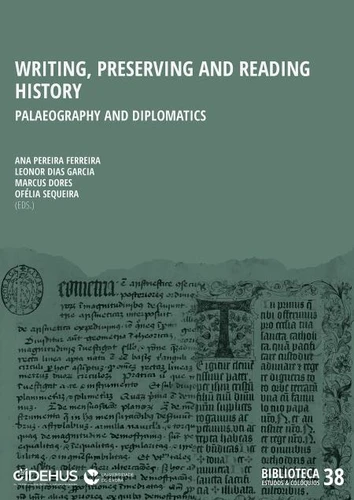
Writing, preserving and reading History
Palaeography and Diplomatics are now central to History and Philology. This science offers a more empirical approach to History. Its importance reaches into Codicology, Onomastics, and Genealogy. The study of writing is essential to understanding historical processes. However, we must question the scope and limits of the study of writing. Should we treat aesthetic and ceremonial details as true reflections of complex histories? Is assigning symbolic meaning to graphic features objective or just based on assumptions? Can calligraphy trends show us social shifts? Exploring these problems shows the challenge of linking writing form to history.
Graphic and stylistic symbols can have many reasons - practical, social, economic, or aesthetic. The texts here make clear that the study and interpretation of data must include a critical examination of the sources. We must also remember the context in which they grew, as this gives them true meaning. This volume therefore, invites us to reflect on the importance of Palaeography and Diplomatics in understanding historical processes, for which interdisciplinary dialogue is also particularly relevant.
Palaeography and Diplomatics are now central to History and Philology. This science offers a more empirical approach to History. Its importance reaches into Codicology, Onomastics, and Genealogy. The study of writing is essential to understanding historical processes. However, we must question the scope and limits of the study of writing. Should we treat aesthetic and ceremonial details as true reflections of complex histories? Is assigning symbolic meaning to graphic features objective or just based on assumptions? Can calligraphy trends show us social shifts? Exploring these problems shows the challenge of linking writing form to history.
Graphic and stylistic symbols can have many reasons - practical, social, economic, or aesthetic. The texts here make clear that the study and interpretation of data must include a critical examination of the sources. We must also remember the context in which they grew, as this gives them true meaning. This volume therefore, invites us to reflect on the importance of Palaeography and Diplomatics in understanding historical processes, for which interdisciplinary dialogue is also particularly relevant.
Les livres de Leonor Dias Garcia

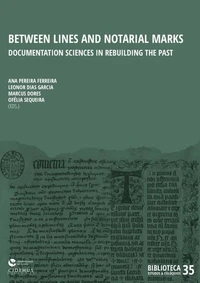
Between Lines and Notarial Marks. Documentation Sciences in rebuilding the past
Ana Pereira Ferreira, Leonor Dias Garcia, Marcus Dores, Ofélia Sequeira
E-book
6,99 €
