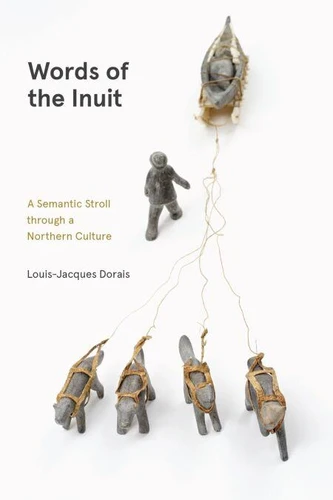
Words of the Inuit is an important compendium of Inuit culture illustrated through Inuit words. It brings the sum of the author's decades of experience and engagement with Inuit and Inuktitut to bear on what he fashions as an amiable, leisurely stroll through words and meanings.
Inuit words are often more complex than English words and frequently contain small units of meaning that add up to convey a larger sensibility.
Dorais' lexical and semantic analyses and reconstructions are not overly technical, yet they reliably evince connections and underlying significations that allow for an in-depth reflection on the richness of Inuit linguistic and cultural heritage and identity. An appendix on the polysynthetic character of Inuit languages includes more detailed grammatical description of interest to more specialist readers.
Organized thematically, the book tours the histories and meanings of the words to illuminate numerous aspects of Inuit culture, including environment and the land; animals and subsistence activities; humans and spirits; family, kinship, and naming; the human body; and socializing with other people in the contemporary world. It concludes with a reflection on the usefulness for modern Inuit-especially youth and others looking to strengthen their cultural identity-to know about the underlying meanings embedded in their language and culture.
With recent reports alerting us to the declining use of the Inuit language in the North, Words of the Inuit is a timely contribution to understanding one of the world's most resilient Indigenous languages.
Words of the Inuit is an important compendium of Inuit culture illustrated through Inuit words. It brings the sum of the author's decades of experience and engagement with Inuit and Inuktitut to bear on what he fashions as an amiable, leisurely stroll through words and meanings.
Inuit words are often more complex than English words and frequently contain small units of meaning that add up to convey a larger sensibility.
Dorais' lexical and semantic analyses and reconstructions are not overly technical, yet they reliably evince connections and underlying significations that allow for an in-depth reflection on the richness of Inuit linguistic and cultural heritage and identity. An appendix on the polysynthetic character of Inuit languages includes more detailed grammatical description of interest to more specialist readers.
Organized thematically, the book tours the histories and meanings of the words to illuminate numerous aspects of Inuit culture, including environment and the land; animals and subsistence activities; humans and spirits; family, kinship, and naming; the human body; and socializing with other people in the contemporary world. It concludes with a reflection on the usefulness for modern Inuit-especially youth and others looking to strengthen their cultural identity-to know about the underlying meanings embedded in their language and culture.
With recent reports alerting us to the declining use of the Inuit language in the North, Words of the Inuit is a timely contribution to understanding one of the world's most resilient Indigenous languages.