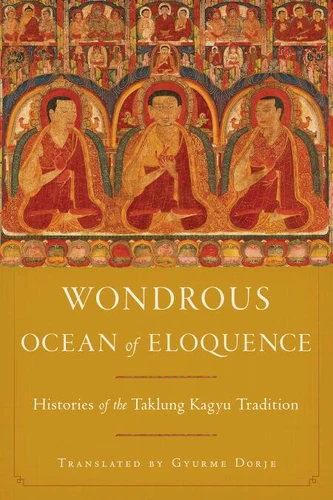
Wondrous Ocean of Eloquence. Histories of the Taklung Kagyu Tradition
Par : , ,Formats :
Disponible dans votre compte client Decitre ou Furet du Nord dès validation de votre commande. Le format ePub protégé est :
- Compatible avec une lecture sur My Vivlio (smartphone, tablette, ordinateur)
- Compatible avec une lecture sur liseuses Vivlio
- Pour les liseuses autres que Vivlio, vous devez utiliser le logiciel Adobe Digital Edition. Non compatible avec la lecture sur les liseuses Kindle, Remarkable et Sony
- Non compatible avec un achat hors France métropolitaine
 , qui est-ce ?
Notre partenaire de plateforme de lecture numérique où vous retrouverez l'ensemble de vos ebooks gratuitement
Pour en savoir plus sur nos ebooks, consultez notre aide en ligne ici
C'est si simple ! Lisez votre ebook avec l'app Vivlio sur votre tablette, mobile ou ordinateur :

- Nombre de pages992
- FormatePub
- ISBN978-0-8348-4602-9
- EAN9780834846029
- Date de parution20/05/2025
- Protection num.Adobe DRM
- Taille17 Mo
- Infos supplémentairesepub
- ÉditeurSnow Lion
Résumé
A comprehensive history of the Taklung Kagyu lineage of Tibetan Buddhism, composed in the seventeenth century, and includes glossy color images of recently discovered twelfth-century portraits and inscriptions?.?This is the first ever English translation of a multilayered and comprehensive historiographical volume on the political, artistic, architectural, biographical, and mystical dimensions of the Taklung, one of four primary subsects of the Kagyu lineage of Tibetan Buddhism.
The bulk of the volume is a translation of an early seventeenth-century Tibetan history by Taklung Ngawang Namgyel and includes supplements to that history written in the eighteenth, nineteenth, and twentieth centuries. Centering an otherwise marginal and understudied Buddhist tradition, this volume contains an extraordinary wealth of historical, religious, and biographical information not found in any other published work.
It is a complex tale of Tibetan religiopolitical maneuvering in the face of centuries of civil unrest and armed conflict with Central Asian warring dynasties. While detailing the abbatial succession of the tradition's two main monastic seats, Taklung and Riwoche Monasteries, it is also broad and vast in scale, going back to sixth-century BCE India to include early Indian Buddhist canon formulation, moving then to narratives on the Tibetan Kagyu lineage holders (Marpa, Milarepa, Gampopa), to the twelfth-century founding of the Taklung sect in Tibet, and then all the way through to the early twentieth century, which saw Tibet's first modern military and cultural conflicts both within the country and with Chinese, Mongol, and Gorkha forces.
An introductory essay by art historian Jane Casey on painting in the Taklung tradition includes her scholarly analysis of the dating and provenance of thirteenth-century portraits and inscriptions, only discovered in recent decades. Glossy color images of these paintings are included in the volume. Shambhala Publications gratefully acknowledges the generous support of Robert H. N. Ho and John Eskenazi in sponsoring the translation, and the Tsadra Foundation in sponsoring the preparation and printing of this book.
The bulk of the volume is a translation of an early seventeenth-century Tibetan history by Taklung Ngawang Namgyel and includes supplements to that history written in the eighteenth, nineteenth, and twentieth centuries. Centering an otherwise marginal and understudied Buddhist tradition, this volume contains an extraordinary wealth of historical, religious, and biographical information not found in any other published work.
It is a complex tale of Tibetan religiopolitical maneuvering in the face of centuries of civil unrest and armed conflict with Central Asian warring dynasties. While detailing the abbatial succession of the tradition's two main monastic seats, Taklung and Riwoche Monasteries, it is also broad and vast in scale, going back to sixth-century BCE India to include early Indian Buddhist canon formulation, moving then to narratives on the Tibetan Kagyu lineage holders (Marpa, Milarepa, Gampopa), to the twelfth-century founding of the Taklung sect in Tibet, and then all the way through to the early twentieth century, which saw Tibet's first modern military and cultural conflicts both within the country and with Chinese, Mongol, and Gorkha forces.
An introductory essay by art historian Jane Casey on painting in the Taklung tradition includes her scholarly analysis of the dating and provenance of thirteenth-century portraits and inscriptions, only discovered in recent decades. Glossy color images of these paintings are included in the volume. Shambhala Publications gratefully acknowledges the generous support of Robert H. N. Ho and John Eskenazi in sponsoring the translation, and the Tsadra Foundation in sponsoring the preparation and printing of this book.