SOLDES
Jusqu'à -70% sur une sélection d'articles*

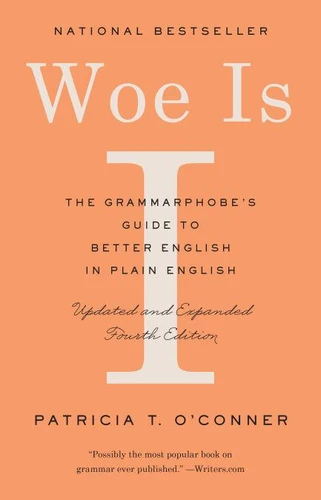
Woe Is I. The Grammarphobe's Guide to Better English in Plain English (Fourth Edition)
Par :Formats :
Disponible dans votre compte client Decitre ou Furet du Nord dès validation de votre commande. Le format ePub protégé est :
- Compatible avec une lecture sur My Vivlio (smartphone, tablette, ordinateur)
- Compatible avec une lecture sur liseuses Vivlio
- Pour les liseuses autres que Vivlio, vous devez utiliser le logiciel Adobe Digital Edition. Non compatible avec la lecture sur les liseuses Kindle, Remarkable et Sony
- Non compatible avec un achat hors France métropolitaine
 , qui est-ce ?
Notre partenaire de plateforme de lecture numérique où vous retrouverez l'ensemble de vos ebooks gratuitement
Pour en savoir plus sur nos ebooks, consultez notre aide en ligne ici
C'est si simple ! Lisez votre ebook avec l'app Vivlio sur votre tablette, mobile ou ordinateur :

- Nombre de pages320
- FormatePub
- ISBN978-0-525-53306-1
- EAN9780525533061
- Date de parution05/02/2019
- Protection num.Adobe DRM
- Taille1 Mo
- Infos supplémentairesepub
- ÉditeurRiverhead Books
Résumé
A revised and updated edition of the iconic grammar guide for the 21st century. In this expanded and updated edition of Woe Is I, former editor at The New York Times Book Review Patricia T. O'Conner unties the knottiest grammar tangles with the same insight and humor that have charmed and enlightened readers of previous editions for years. With fresh insights into the rights, wrongs, and maybes of English grammar and usage, O'Conner offers in Woe Is I down-to-earth explanations and plain-English solutions to the language mysteries that bedevil all of us."Books about English grammar and usage are...
never content with the status quo, " O'Conner writes. "That's because English is not a stay-put language. It's always changing--expanding here, shrinking there, trying on new things, casting off old ones... Time doesn't stand still and neither does language."In this fourth edition, O'Conner explains how the usage of an array of words has evolved. For example, the once-shunned "they, " "them, " and "their" for an unknown somebody is now acceptable.
And the battle between "who" and "whom" has just about been won, O'Conner says (hint: It wasn't by "whom"). Then there's the use of "taller than me" in simple comparisons, instead of the ramrod-stiff "taller than I." "May" and "might, " "use to" and "used to, " abbreviations that use periods and those that don't, and the evolving definition of "unique" are all explained here by O'Conner. The result is an engaging, up-to-date and jargon-free guide to every reader's questions about grammar, style, and usage for the 21st century.
never content with the status quo, " O'Conner writes. "That's because English is not a stay-put language. It's always changing--expanding here, shrinking there, trying on new things, casting off old ones... Time doesn't stand still and neither does language."In this fourth edition, O'Conner explains how the usage of an array of words has evolved. For example, the once-shunned "they, " "them, " and "their" for an unknown somebody is now acceptable.
And the battle between "who" and "whom" has just about been won, O'Conner says (hint: It wasn't by "whom"). Then there's the use of "taller than me" in simple comparisons, instead of the ramrod-stiff "taller than I." "May" and "might, " "use to" and "used to, " abbreviations that use periods and those that don't, and the evolving definition of "unique" are all explained here by O'Conner. The result is an engaging, up-to-date and jargon-free guide to every reader's questions about grammar, style, and usage for the 21st century.