SOLDES
Jusqu'à -70% sur une sélection d'articles*

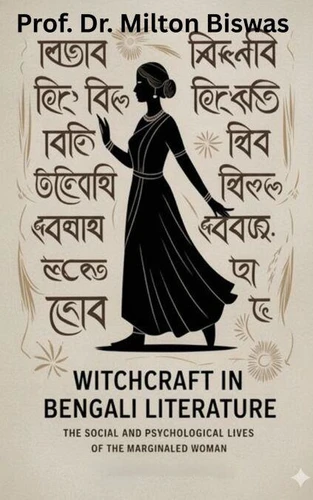
Witchcraft in Bengali Literature: The Social and Psychological Lives of the Marginalized Woman
Par :Formats :
Disponible dans votre compte client Decitre ou Furet du Nord dès validation de votre commande. Le format ePub est :
- Compatible avec une lecture sur My Vivlio (smartphone, tablette, ordinateur)
- Compatible avec une lecture sur liseuses Vivlio
- Pour les liseuses autres que Vivlio, vous devez utiliser le logiciel Adobe Digital Edition. Non compatible avec la lecture sur les liseuses Kindle, Remarkable et Sony
 , qui est-ce ?
Notre partenaire de plateforme de lecture numérique où vous retrouverez l'ensemble de vos ebooks gratuitement
Pour en savoir plus sur nos ebooks, consultez notre aide en ligne ici
C'est si simple ! Lisez votre ebook avec l'app Vivlio sur votre tablette, mobile ou ordinateur :

- FormatePub
- ISBN8233844638
- EAN9798233844638
- Date de parution22/03/2026
- Protection num.pas de protection
- Infos supplémentairesepub
- ÉditeurLinda Balsamo
Résumé
Witchcraft has long occupied a disturbing yet fascinating space in the cultural and literary imagination of Bengal. In this groundbreaking interdisciplinary study, Prof. Dr. Milton Biswas explores the figure of the daini - the alleged witch - as a powerful symbolic construct shaped by patriarchal fears, social exclusion, and psychological anxieties. Moving beyond simplistic notions of superstition, the book reveals how accusations of witchcraft function as instruments of gendered control and social regulation within traditional and modern Bengali societies.
Drawing on a wide range of Bengali short stories, folklore traditions, and contemporary socio-cultural realities, this volume examines how marginalized women are transformed into mythical figures of terror. Widows, elderly women, economically vulnerable individuals, and those who resist normative expectations often become the targets of suspicion and violence. Through close textual readings supported by feminist theory, psychoanalytic interpretation, and postcolonial critique, the author demonstrates how literature both reflects and challenges these oppressive structures.
The book further investigates the psychological mechanisms underlying witch-phobia, including collective panic, projection, and scapegoating. It also addresses the disturbing links between witchcraft allegations and broader patterns of gender-based violence, including social ostracism, dispossession, and physical persecution. By situating literary narratives alongside real-life case studies from South Asia, the study underscores the urgent ethical relevance of examining such themes within contemporary scholarship.
At the same time, Witchcraft in Bengali Literature highlights emerging literary trends that reimagine the daini as a figure of resistance, resilience, and moral insight. Modern writers increasingly portray marginalized women not as supernatural threats but as victims of structural injustice and as agents of cultural transformation. This shift reflects broader social movements advocating gender justice, human dignity, and the reclamation of suppressed histories.
Combining rigorous academic analysis with compelling narrative clarity, this book is essential reading for students and scholars of South Asian literature, gender studies, folklore, cultural anthropology, and postcolonial theory. It also offers general readers an illuminating exploration of how myth, fear, and storytelling shape the boundaries of belonging and exclusion. Ultimately, this work invites readers to rethink the symbolic power of the daini and to recognize literature as a vital space where societies confront their deepest anxieties while imagining more humane futures.
Drawing on a wide range of Bengali short stories, folklore traditions, and contemporary socio-cultural realities, this volume examines how marginalized women are transformed into mythical figures of terror. Widows, elderly women, economically vulnerable individuals, and those who resist normative expectations often become the targets of suspicion and violence. Through close textual readings supported by feminist theory, psychoanalytic interpretation, and postcolonial critique, the author demonstrates how literature both reflects and challenges these oppressive structures.
The book further investigates the psychological mechanisms underlying witch-phobia, including collective panic, projection, and scapegoating. It also addresses the disturbing links between witchcraft allegations and broader patterns of gender-based violence, including social ostracism, dispossession, and physical persecution. By situating literary narratives alongside real-life case studies from South Asia, the study underscores the urgent ethical relevance of examining such themes within contemporary scholarship.
At the same time, Witchcraft in Bengali Literature highlights emerging literary trends that reimagine the daini as a figure of resistance, resilience, and moral insight. Modern writers increasingly portray marginalized women not as supernatural threats but as victims of structural injustice and as agents of cultural transformation. This shift reflects broader social movements advocating gender justice, human dignity, and the reclamation of suppressed histories.
Combining rigorous academic analysis with compelling narrative clarity, this book is essential reading for students and scholars of South Asian literature, gender studies, folklore, cultural anthropology, and postcolonial theory. It also offers general readers an illuminating exploration of how myth, fear, and storytelling shape the boundaries of belonging and exclusion. Ultimately, this work invites readers to rethink the symbolic power of the daini and to recognize literature as a vital space where societies confront their deepest anxieties while imagining more humane futures.