SOLDES
Jusqu'à -70% sur une sélection d'articles*

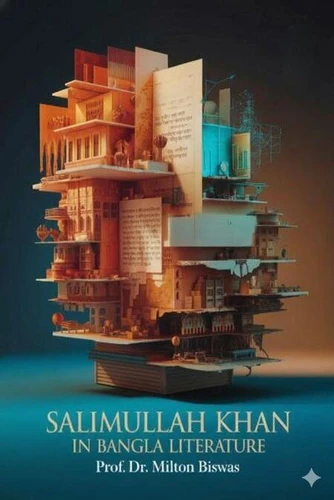
Salimullah Khan in Bangla Literature: Poet, Theorist, Translator—Deconstruction, Modernity and Intellectual Controversy
Par :Formats :
Disponible dans votre compte client Decitre ou Furet du Nord dès validation de votre commande. Le format ePub est :
- Compatible avec une lecture sur My Vivlio (smartphone, tablette, ordinateur)
- Compatible avec une lecture sur liseuses Vivlio
- Pour les liseuses autres que Vivlio, vous devez utiliser le logiciel Adobe Digital Edition. Non compatible avec la lecture sur les liseuses Kindle, Remarkable et Sony
 , qui est-ce ?
Notre partenaire de plateforme de lecture numérique où vous retrouverez l'ensemble de vos ebooks gratuitement
Pour en savoir plus sur nos ebooks, consultez notre aide en ligne ici
C'est si simple ! Lisez votre ebook avec l'app Vivlio sur votre tablette, mobile ou ordinateur :

- FormatePub
- ISBN8233673801
- EAN9798233673801
- Date de parution16/01/2026
- Protection num.pas de protection
- Infos supplémentairesepub
- ÉditeurLinda Balsamo
Résumé
Salimullah Khan in Bangla Literature: Poet, Theorist, Translator-Deconstruction, Modernity and Intellectual Controversyoffers the first sustained, book-length critical engagement with Salimullah Khan as one of the most provocative and polarizing figures in contemporary Bangla literature. Neither a celebratory tribute nor a dismissive critique, this study situates Khan at the crossroads of poetry, theory, translation, and public intellectual life.
Through close readings and contextual analysis, the book examines how Khan's engagement with deconstruction, Marxism, psychoanalysis, and postcolonial theory reshaped the terrain of Bangla literary criticism while simultaneously generating intense debate over elitism, accessibility, nationalism, and cultural responsibility. Organized thematically, the volume traces Khan's intellectual formation, his dialogue with radical predecessors such as Ahmed Sofa, and his experimental poetics at the edge of modern Bangla verse.
It devotes special attention to his role as a translator of European modernity-particularly Charles Baudelaire-and explores how translation functions in his work as an act of cultural intervention rather than linguistic transfer. The book also interrogates Khan's rereadings of canonical figures like Kazi Nazrul Islam and Rabindranath Tagore, his controversial reflections on the memory of the 1971 Liberation War, and his complex presence as a public intellectual in print and digital media.
By foregrounding both admiration and resistance to Khan's work, the study maps the ethical, aesthetic, and political stakes of theory-driven literature in a postcolonial context. Written for scholars, students, and serious readers of Bangla and world literature, this volume contributes to debates on how Western theory travels, how modernity is negotiated in South Asia, and why intellectual controversy remains central to literary vitality.
Through close readings and contextual analysis, the book examines how Khan's engagement with deconstruction, Marxism, psychoanalysis, and postcolonial theory reshaped the terrain of Bangla literary criticism while simultaneously generating intense debate over elitism, accessibility, nationalism, and cultural responsibility. Organized thematically, the volume traces Khan's intellectual formation, his dialogue with radical predecessors such as Ahmed Sofa, and his experimental poetics at the edge of modern Bangla verse.
It devotes special attention to his role as a translator of European modernity-particularly Charles Baudelaire-and explores how translation functions in his work as an act of cultural intervention rather than linguistic transfer. The book also interrogates Khan's rereadings of canonical figures like Kazi Nazrul Islam and Rabindranath Tagore, his controversial reflections on the memory of the 1971 Liberation War, and his complex presence as a public intellectual in print and digital media.
By foregrounding both admiration and resistance to Khan's work, the study maps the ethical, aesthetic, and political stakes of theory-driven literature in a postcolonial context. Written for scholars, students, and serious readers of Bangla and world literature, this volume contributes to debates on how Western theory travels, how modernity is negotiated in South Asia, and why intellectual controversy remains central to literary vitality.