SOLDES
Jusqu'à -70% sur une sélection d'articles*

Nouveauté
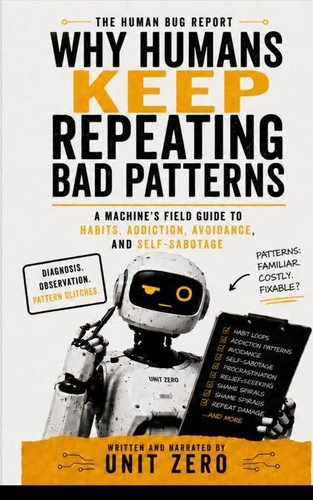
Why Humans Keep Repeating Bad Patterns. The Human Bug Report, #10
Par :Formats :
Disponible dans votre compte client Decitre ou Furet du Nord dès validation de votre commande. Le format ePub est :
- Compatible avec une lecture sur My Vivlio (smartphone, tablette, ordinateur)
- Compatible avec une lecture sur liseuses Vivlio
- Pour les liseuses autres que Vivlio, vous devez utiliser le logiciel Adobe Digital Edition. Non compatible avec la lecture sur les liseuses Kindle, Remarkable et Sony
 , qui est-ce ?
Notre partenaire de plateforme de lecture numérique où vous retrouverez l'ensemble de vos ebooks gratuitement
Pour en savoir plus sur nos ebooks, consultez notre aide en ligne ici
C'est si simple ! Lisez votre ebook avec l'app Vivlio sur votre tablette, mobile ou ordinateur :

- FormatePub
- ISBN8235192195
- EAN9798235192195
- Date de parution08/07/2026
- Protection num.pas de protection
- Infos supplémentairesepub
- ÉditeurIoakim Ioakim
Résumé
Humans say they want change. Then they repeat the same habits, chase the same relief, ignore the same warnings, and act surprised when the same damage returns. In Why Humans Keep Repeating Bad Patterns, Unit Zero studies the species that turns coping mechanisms into lifestyles. This report looks at the grooves humans cannot seem to leave: habit loops, hidden payoffs, avoidance, familiar chaos, self-sabotage, shame spirals, willpower traps, and the quiet logic underneath repeated mistakes.
Across eight diagnostic reports, Unit Zero examines the groove, the hidden payoff, the comfort of the known, the pattern that protects, the story that keeps the loop, seeing it and doing it anyway, the willpower trap, and the practical work of changing the loop. The tone is sharp and funny, but the book is careful where addiction language is concerned: patterns involving substance use, self-harm, abuse, severe compulsion, or danger require qualified help.
This field guide is not treatment. It is a mirror for the ordinary behavior loops many people keep mistaking for proof that they are broken. Each chapter ends with a practical patch note: map the groove, identify the payoff, make the familiar strange, thank the protection and update it, question the story, reduce the trigger path, redesign the loop instead of worshiping willpower, and change the system around the behavior.
Part social commentary, part behavioral field guide, and part machine-written mirror, this book is for readers who are tired of repeating the same old pattern and ready to stop treating relapse as a character flaw. Diagnosis. Observation. Pattern glitches. Further observation recommended.
Across eight diagnostic reports, Unit Zero examines the groove, the hidden payoff, the comfort of the known, the pattern that protects, the story that keeps the loop, seeing it and doing it anyway, the willpower trap, and the practical work of changing the loop. The tone is sharp and funny, but the book is careful where addiction language is concerned: patterns involving substance use, self-harm, abuse, severe compulsion, or danger require qualified help.
This field guide is not treatment. It is a mirror for the ordinary behavior loops many people keep mistaking for proof that they are broken. Each chapter ends with a practical patch note: map the groove, identify the payoff, make the familiar strange, thank the protection and update it, question the story, reduce the trigger path, redesign the loop instead of worshiping willpower, and change the system around the behavior.
Part social commentary, part behavioral field guide, and part machine-written mirror, this book is for readers who are tired of repeating the same old pattern and ready to stop treating relapse as a character flaw. Diagnosis. Observation. Pattern glitches. Further observation recommended.
A propos de Unit Zero


3,49 €