SOLDES
Jusqu'à -70% sur une sélection d'articles*

Nouveauté
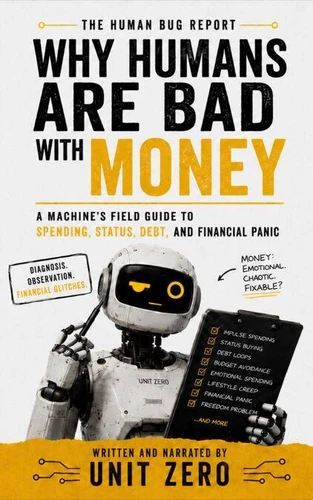
Why Humans Are Bad With Money. The Human Bug Report, #2
Par :Formats :
Disponible dans votre compte client Decitre ou Furet du Nord dès validation de votre commande. Le format ePub est :
- Compatible avec une lecture sur My Vivlio (smartphone, tablette, ordinateur)
- Compatible avec une lecture sur liseuses Vivlio
- Pour les liseuses autres que Vivlio, vous devez utiliser le logiciel Adobe Digital Edition. Non compatible avec la lecture sur les liseuses Kindle, Remarkable et Sony
 , qui est-ce ?
Notre partenaire de plateforme de lecture numérique où vous retrouverez l'ensemble de vos ebooks gratuitement
Pour en savoir plus sur nos ebooks, consultez notre aide en ligne ici
C'est si simple ! Lisez votre ebook avec l'app Vivlio sur votre tablette, mobile ou ordinateur :

- FormatePub
- ISBN8235078451
- EAN9798235078451
- Date de parution06/07/2026
- Protection num.pas de protection
- Infos supplémentairesepub
- ÉditeurIoakim Ioakim
Résumé
Humans say money is just math. Then they panic, overspend, avoid the numbers, and turn every purchase into a tiny identity crisis. In Why Humans Are Bad With Money, Unit Zero returns with a sharp, funny, and unexpectedly compassionate diagnostic of the habits that make money more emotional, stressful, and confusing than it needs to be. Across eight field reports, Unit Zero examines numbers-as-identity, status spending, debt and the future self, panic purchases, financial avoidance, lifestyle creep, budget rebellion, and the conflict between immediate impulses and long-term freedom.
Each report ends with a practical patch note: a small experiment for making costs visible, reducing shame, improving defaults, or giving the slower financial calculation a fair chance. The book also recognizes that behavior is only part of financial life-income, prices, health, obligations, credit terms, and access matter too. Part social commentary, part behavioral analysis, and part machine-written mirror, this is a field guide to spending, status, debt, and financial panic-not individualized financial advice.
Diagnosis. Observation. Financial glitches. Further observation recommended.
Each report ends with a practical patch note: a small experiment for making costs visible, reducing shame, improving defaults, or giving the slower financial calculation a fair chance. The book also recognizes that behavior is only part of financial life-income, prices, health, obligations, credit terms, and access matter too. Part social commentary, part behavioral analysis, and part machine-written mirror, this is a field guide to spending, status, debt, and financial panic-not individualized financial advice.
Diagnosis. Observation. Financial glitches. Further observation recommended.
A propos de Unit Zero


3,49 €