SOLDES
Jusqu'à -70% sur une sélection d'articles*

Nouveauté
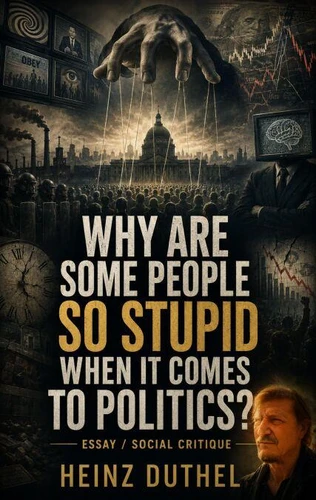
Why Are Some People So Stupid When It Comes to Politics?. Essay / Social Critique
Par :Formats :
Disponible dans votre compte client Decitre ou Furet du Nord dès validation de votre commande. Le format ePub est :
- Compatible avec une lecture sur My Vivlio (smartphone, tablette, ordinateur)
- Compatible avec une lecture sur liseuses Vivlio
- Pour les liseuses autres que Vivlio, vous devez utiliser le logiciel Adobe Digital Edition. Non compatible avec la lecture sur les liseuses Kindle, Remarkable et Sony
 , qui est-ce ?
Notre partenaire de plateforme de lecture numérique où vous retrouverez l'ensemble de vos ebooks gratuitement
Pour en savoir plus sur nos ebooks, consultez notre aide en ligne ici
C'est si simple ! Lisez votre ebook avec l'app Vivlio sur votre tablette, mobile ou ordinateur :

- Nombre de pages152
- FormatePub
- ISBN978-3-565-52389-4
- EAN9783565523894
- Date de parution20/06/2026
- Protection num.pas de protection
- Taille3 Mo
- Infos supplémentairesepub
- ÉditeurEmphaloz Publishing House
Résumé
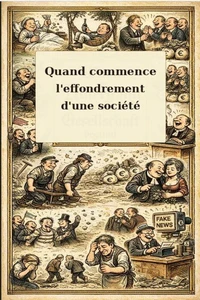
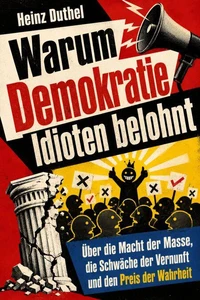
**Why Are Some People So Stupid When It Comes to Politics?** is a polemical essay about political manipulation, social inequality, capitalism, ideology, and power.
This book asks an uncomfortable question: Why do people accept political systems, economic exploitation, and social injustice even when they suffer from their consequences every day? Why do so many defend the very structures that keep them dependent, exhausted, and powerless?
Heinz Duthel examines the mechanisms through which power remains stable: language, fear, habit, media, economic pressure, and the illusion of personal freedom.
At the center of this work is a radical social critique of a system that transforms labor into profit, divides people into competitors, and presents political powerlessness as normal life. The essay combines capitalism criticism, political philosophy, and class consciousness into a direct analysis of modern power relations. It explores how ideology works, why political propaganda is effective, and why economic dependence is often presented as freedom. This book is written for readers interested in political manipulation, social justice, capitalism criticism, the working class, economic exploitation, ideology, and power.
It is not a neutral commentary, but a sharp text about adaptation, resistance, and the possibility of rethinking society itself. For anyone who wants to understand why people believe political lies, why systems of inequality continue to exist, and how consciousness can become the first form of resistance, this book offers a provocative, clear, and uncompromising analysis.
At the center of this work is a radical social critique of a system that transforms labor into profit, divides people into competitors, and presents political powerlessness as normal life. The essay combines capitalism criticism, political philosophy, and class consciousness into a direct analysis of modern power relations. It explores how ideology works, why political propaganda is effective, and why economic dependence is often presented as freedom. This book is written for readers interested in political manipulation, social justice, capitalism criticism, the working class, economic exploitation, ideology, and power.
It is not a neutral commentary, but a sharp text about adaptation, resistance, and the possibility of rethinking society itself. For anyone who wants to understand why people believe political lies, why systems of inequality continue to exist, and how consciousness can become the first form of resistance, this book offers a provocative, clear, and uncompromising analysis.