Writes intellectual nonfiction about creativity, literature, and cultural memory.
Nouveauté
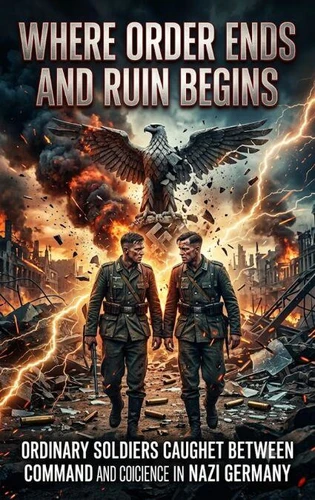
Where Order Ends and Ruin Begins. Ordinary soldiers caught between command and conscience in Nazi Germany
Par :Formats :
Disponible dans votre compte client Decitre ou Furet du Nord dès validation de votre commande. Le format ePub est :
- Compatible avec une lecture sur My Vivlio (smartphone, tablette, ordinateur)
- Compatible avec une lecture sur liseuses Vivlio
- Pour les liseuses autres que Vivlio, vous devez utiliser le logiciel Adobe Digital Edition. Non compatible avec la lecture sur les liseuses Kindle, Remarkable et Sony
 , qui est-ce ?
Notre partenaire de plateforme de lecture numérique où vous retrouverez l'ensemble de vos ebooks gratuitement
Pour en savoir plus sur nos ebooks, consultez notre aide en ligne ici
C'est si simple ! Lisez votre ebook avec l'app Vivlio sur votre tablette, mobile ou ordinateur :

- Nombre de pages205
- FormatePub
- ISBN978-3-565-55504-8
- EAN9783565555048
- Date de parution10/07/2026
- Protection num.pas de protection
- Taille673 Ko
- Infos supplémentairesepub
- ÉditeurEmphaloz Publishing House
Résumé
Every campaign begins with a map, a pointer, a word spoken in a room that never sees mud. This book examines how German military leadership constructed a war machine that consumed itself faster than it conquered its enemies. Through operational decisions from the invasion of Poland to the collapse of Army Group Center, the narrative traces not just troop movements but the logic of annihilation embedded within each order.
Strategy becomes inseparable from ideology when generals plan for extinction. The Eastern Front reveals this most clearly where supply lines frayed and doctrine replaced judgment. Behind every tactical success lay a moral failure that accumulated into catastrophe. This is not a chronicle of battles but an autopsy of command where competence served a criminal state. The war did not end in Berlin alone.
It ended in the minds of men who believed they served duty while serving destruction. For readers who understand that military history asks harder questions than who won or lost.
Strategy becomes inseparable from ideology when generals plan for extinction. The Eastern Front reveals this most clearly where supply lines frayed and doctrine replaced judgment. Behind every tactical success lay a moral failure that accumulated into catastrophe. This is not a chronicle of battles but an autopsy of command where competence served a criminal state. The war did not end in Berlin alone.
It ended in the minds of men who believed they served duty while serving destruction. For readers who understand that military history asks harder questions than who won or lost.
A propos de Natalie Harrington

9,99 €


9,99 €