Wesley Prescott is an English-language author specializing in history, geopolitics, and international affairs. His books examine the forces behind political change, global conflicts, and shifting power structures across different eras. His writing is known for its balanced perspective, detailed research, and engaging narrative style that brings complex historical developments to life.
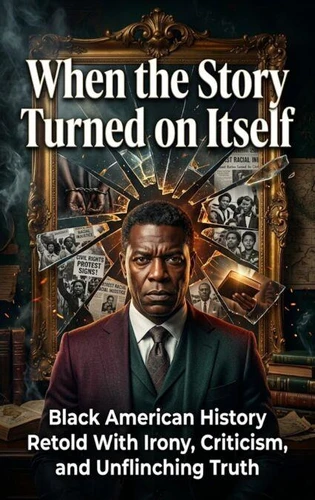
When the Story Turned on Itself. Black American History Retold With Irony, Criticism, and Unflinching Truth
Par :Formats :
Disponible dans votre compte client Decitre ou Furet du Nord dès validation de votre commande. Le format ePub est :
- Compatible avec une lecture sur My Vivlio (smartphone, tablette, ordinateur)
- Compatible avec une lecture sur liseuses Vivlio
- Pour les liseuses autres que Vivlio, vous devez utiliser le logiciel Adobe Digital Edition. Non compatible avec la lecture sur les liseuses Kindle, Remarkable et Sony
 , qui est-ce ?
Notre partenaire de plateforme de lecture numérique où vous retrouverez l'ensemble de vos ebooks gratuitement
Pour en savoir plus sur nos ebooks, consultez notre aide en ligne ici
C'est si simple ! Lisez votre ebook avec l'app Vivlio sur votre tablette, mobile ou ordinateur :

- Nombre de pages186
- FormatePub
- ISBN978-3-565-46488-3
- EAN9783565464883
- Date de parution28/05/2026
- Protection num.pas de protection
- Taille1 Mo
- Infos supplémentairesepub
- ÉditeurEmphaloz Publishing House
Résumé
This book re-reads Black American history through a mix of irony, critique, and unflinching honesty, treating the past not as a tidy redemptive arc but as a chain of contradictions that still shape the present. It traces how slavery, emancipation, Reconstruction, Jim Crow, and the post-civil-rights era were all narrated in competing ways-sometimes as heroic rises, sometimes as repeated betrayals-while asking who is allowed to tell those stories and who is reduced to their suffering.
The narrative centers on three interwoven processes: how irony and satire became tools for African Americans to expose the absurdity of "freedom" within racial capitalism, how official histories and public memory often sanitize or erase Black agency and resistance, and how confronting unflinching truths-about violence, law, and economic exclusion-challenges the myth of steady national progress.
Drawing on Black-led scholarship, oral histories, and cultural production, the book shows how Black thinkers and artists have turned irony into a method of critique, recasting familiar milestones as moments of both triumph and tactical retreat.
Drawing on Black-led scholarship, oral histories, and cultural production, the book shows how Black thinkers and artists have turned irony into a method of critique, recasting familiar milestones as moments of both triumph and tactical retreat.