Wesley Prescott is an English-language author specializing in history, geopolitics, and international affairs. His books examine the forces behind political change, global conflicts, and shifting power structures across different eras. His writing is known for its balanced perspective, detailed research, and engaging narrative style that brings complex historical developments to life.
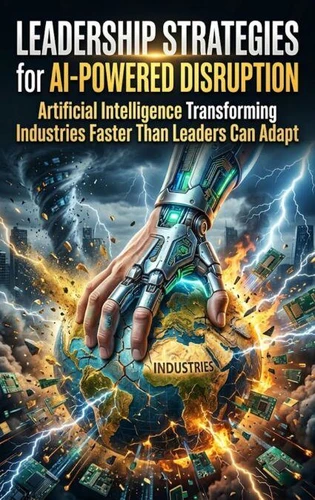
Leadership Strategies for AI-Powered Disruption. Artificial Intelligence Transforming Industries Faster Than Leaders Can Adapt
Par :Formats :
Disponible dans votre compte client Decitre ou Furet du Nord dès validation de votre commande. Le format ePub est :
- Compatible avec une lecture sur My Vivlio (smartphone, tablette, ordinateur)
- Compatible avec une lecture sur liseuses Vivlio
- Pour les liseuses autres que Vivlio, vous devez utiliser le logiciel Adobe Digital Edition. Non compatible avec la lecture sur les liseuses Kindle, Remarkable et Sony
 , qui est-ce ?
Notre partenaire de plateforme de lecture numérique où vous retrouverez l'ensemble de vos ebooks gratuitement
Pour en savoir plus sur nos ebooks, consultez notre aide en ligne ici
C'est si simple ! Lisez votre ebook avec l'app Vivlio sur votre tablette, mobile ou ordinateur :

- Nombre de pages150
- FormatePub
- ISBN978-3-565-44829-6
- EAN9783565448296
- Date de parution18/05/2026
- Protection num.pas de protection
- Taille2 Mo
- Infos supplémentairesepub
- ÉditeurEmphaloz Publishing House
Résumé
This book examines how artificial intelligence is reshaping industries at a pace that challenges traditional leadership models, drawing on data showing 87% of large enterprises have adopted AI while 74% struggle to scale its value. It explores the strategic imperatives for leaders to build adaptive organizations, foster AI literacy, and redesign decision-making processes to keep up with rapid technological change.
Rather than offering quick fixes, the work provides a framework for aligning technology adoption with long-term business resilience, ethical considerations, and workforce development, grounded in empirical insights from sectors such as healthcare, finance, and manufacturing.
Rather than offering quick fixes, the work provides a framework for aligning technology adoption with long-term business resilience, ethical considerations, and workforce development, grounded in empirical insights from sectors such as healthcare, finance, and manufacturing.