SOLDES
Jusqu'à -70% sur une sélection d'articles*

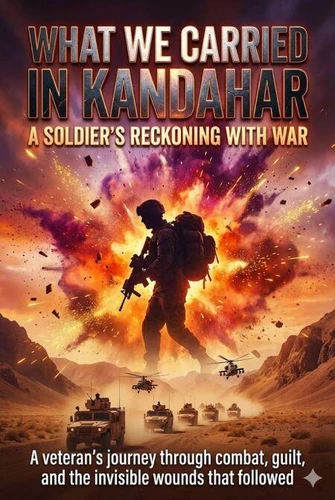
What We Carried in Kandahar: A Soldier's Reckoning with War. A veteran's journey through combat, guilt, and the invisible wounds that followed
Par :Formats :
Disponible dans votre compte client Decitre ou Furet du Nord dès validation de votre commande. Le format ePub est :
- Compatible avec une lecture sur My Vivlio (smartphone, tablette, ordinateur)
- Compatible avec une lecture sur liseuses Vivlio
- Pour les liseuses autres que Vivlio, vous devez utiliser le logiciel Adobe Digital Edition. Non compatible avec la lecture sur les liseuses Kindle, Remarkable et Sony
 , qui est-ce ?
Notre partenaire de plateforme de lecture numérique où vous retrouverez l'ensemble de vos ebooks gratuitement
Pour en savoir plus sur nos ebooks, consultez notre aide en ligne ici
C'est si simple ! Lisez votre ebook avec l'app Vivlio sur votre tablette, mobile ou ordinateur :

- Nombre de pages240
- FormatePub
- ISBN978-3-565-13473-1
- EAN9783565134731
- Date de parution18/12/2025
- Protection num.pas de protection
- Taille365 Ko
- Infos supplémentairesepub
- ÉditeurEmphaloz Publishing House
Résumé
In Kandahar, soldiers learn to compartmentalize-to file away the things they see, do, and survive into boxes labeled "necessary, " "unavoidable, " "acceptable." But boxes have a way of breaking open.
This is the raw, unflinching memoir of a British soldier who served multiple deployments in Afghanistan's deadliest province. Through visceral combat scenes and quiet moments of doubt, readers enter the mind of a man trained to make split-second decisions that echoed with consequences he couldn't fully calculate in real time.
The insurgent. The checkpoint. The civilian casualty that haunts you differently than enemy fire-because it haunts you with questions you can't answer. Beyond the battlefield, this memoir traces the invisible journey home: a soldier returning to a country that welcomed him as a hero while he was drowning in guilt he couldn't articulate. PTSD wasn't just nightmares and hypervigilance-it was isolation, shame, and the terrifying discovery that the person who came back wasn't quite the person who left. But this isn't a story of permanent brokenness.
It's an unflinching exploration of moral injury, the complexity of following orders in an ambiguous war, and the painstaking work of rebuilding identity, relationships, and purpose. Through therapy, connection, and brutal honesty, the narrator discovers that healing isn't about forgetting-it's about integrating what happened into who you're becoming. Essential reading for veterans seeking recognition of their internal battles, families struggling to understand their loved ones' invisible wounds, civilians seeking to understand the human cost of military service, and anyone questioning the true price of war.
The insurgent. The checkpoint. The civilian casualty that haunts you differently than enemy fire-because it haunts you with questions you can't answer. Beyond the battlefield, this memoir traces the invisible journey home: a soldier returning to a country that welcomed him as a hero while he was drowning in guilt he couldn't articulate. PTSD wasn't just nightmares and hypervigilance-it was isolation, shame, and the terrifying discovery that the person who came back wasn't quite the person who left. But this isn't a story of permanent brokenness.
It's an unflinching exploration of moral injury, the complexity of following orders in an ambiguous war, and the painstaking work of rebuilding identity, relationships, and purpose. Through therapy, connection, and brutal honesty, the narrator discovers that healing isn't about forgetting-it's about integrating what happened into who you're becoming. Essential reading for veterans seeking recognition of their internal battles, families struggling to understand their loved ones' invisible wounds, civilians seeking to understand the human cost of military service, and anyone questioning the true price of war.