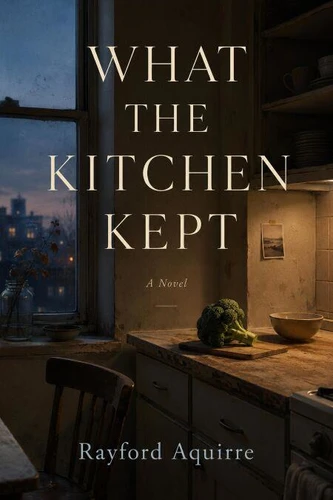
Julian Arlen once built a career teaching strangers how to eat better. Now his marriage is over, his reputation is fading, and one final book may be his chance to become relevant again. He begins again in Apartment 4C, inside a worn kitchen with one window, scarred counters, imperfect plumbing - and a consciousness no human being knows exists. The kitchen cannot read Julian's thoughts. It cannot follow him outside.
It knows only what enters its walls: the food he sorts into acceptable and unacceptable, the arguments conducted across its counter, the abandoned meals, the documents left open beneath its lights, and the people who keep returning. As Julian develops a new nutritional system designed to make food measurable, defensible, and certain, science editor Nia Serrano begins finding fractures in the claims beneath it.
Commercial pressure rewards confidence. Julian's rules harden. Then a public question turns a private compromise into something impossible to contain. At the same time, the building itself has been sold. As Julian's professional world contracts and Apartment 4C changes from private refuge to media studio to gathering place for neighbors fighting displacement, the kitchen witnesses a different measure of human value emerging - one that cannot be reduced to purity, proof, optimization, or ownership.
What the Kitchen Kept is a literary novel about food and grief, evidence and self-deception, the moral seduction of certainty, and the ordinary acts through which people care for one another when nothing can be made perfect. And through it all, the most reliable witness in the room is the one that can never tell anyone what it knows.
Julian Arlen once built a career teaching strangers how to eat better. Now his marriage is over, his reputation is fading, and one final book may be his chance to become relevant again. He begins again in Apartment 4C, inside a worn kitchen with one window, scarred counters, imperfect plumbing - and a consciousness no human being knows exists. The kitchen cannot read Julian's thoughts. It cannot follow him outside.
It knows only what enters its walls: the food he sorts into acceptable and unacceptable, the arguments conducted across its counter, the abandoned meals, the documents left open beneath its lights, and the people who keep returning. As Julian develops a new nutritional system designed to make food measurable, defensible, and certain, science editor Nia Serrano begins finding fractures in the claims beneath it.
Commercial pressure rewards confidence. Julian's rules harden. Then a public question turns a private compromise into something impossible to contain. At the same time, the building itself has been sold. As Julian's professional world contracts and Apartment 4C changes from private refuge to media studio to gathering place for neighbors fighting displacement, the kitchen witnesses a different measure of human value emerging - one that cannot be reduced to purity, proof, optimization, or ownership.
What the Kitchen Kept is a literary novel about food and grief, evidence and self-deception, the moral seduction of certainty, and the ordinary acts through which people care for one another when nothing can be made perfect. And through it all, the most reliable witness in the room is the one that can never tell anyone what it knows.