What Should We Be Worried About?. Real Scenarios That Keep Scientists Up at Night
Par :Formats :
Disponible dans votre compte client Decitre ou Furet du Nord dès validation de votre commande. Le format ePub protégé est :
- Compatible avec une lecture sur My Vivlio (smartphone, tablette, ordinateur)
- Compatible avec une lecture sur liseuses Vivlio
- Pour les liseuses autres que Vivlio, vous devez utiliser le logiciel Adobe Digital Edition. Non compatible avec la lecture sur les liseuses Kindle, Remarkable et Sony
- Non compatible avec un achat hors France métropolitaine
 , qui est-ce ?
Notre partenaire de plateforme de lecture numérique où vous retrouverez l'ensemble de vos ebooks gratuitement
Pour en savoir plus sur nos ebooks, consultez notre aide en ligne ici
C'est si simple ! Lisez votre ebook avec l'app Vivlio sur votre tablette, mobile ou ordinateur :

- FormatePub
- ISBN978-0-06-229624-5
- EAN9780062296245
- Date de parution11/02/2014
- Protection num.Adobe DRM
- Infos supplémentairesepub
- ÉditeurHarper Perennial
Résumé
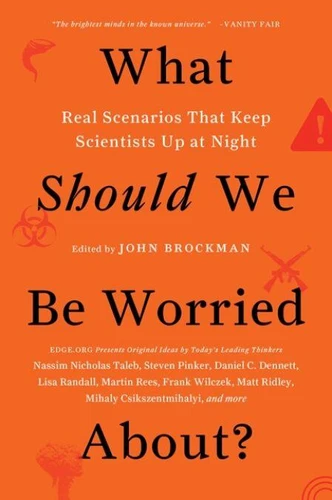
Drawing from the horizons of science, today's leading thinkers reveal the hidden threats nobody is talking about-and expose the false fears everyone else is distracted by. What should we be worried about? That is the question John Brockman, publisher of Edge.org ("The world's smartest website"-The Guardian), posed to the planet's most influential minds. He asked them to disclose something that, for scientific reasons, worries them-particularly scenarios that aren't on the popular radar yet.
Encompassing neuroscience, economics, philosophy, physics, psychology, biology, and more-here are 150 ideas that will revolutionize your understanding of the world. Steven Pinker uncovers the real risk factors for war ? Mihaly Csikszentmihalyi peers into the coming virtual abyss ? Nobel laureate Frank Wilczek laments our squandered opportunities to prevent global catastrophe ? Seth Lloyd calculates the threat of a financial black hole ? Alison Gopnik on the loss of childhood ? Nassim Nicholas Taleb explains why firefighters understand risk far better than economic "experts" ? Matt Ridley on the alarming re-emergence of superstition ? Daniel C.
Dennett and george dyson ponder the impact of a major breakdown of the Internet ? Jennifer Jacquet fears human-induced damage to the planet due to "the Anthropocebo Effect" ? Douglas Rushkoff fears humanity is losing its soul ? Nicholas Carr on the "patience deficit" ? Tim O'Reilly foresees a coming new Dark Age ? Scott Atran on the homogenization of human experience ? Sherry Turkle explores what's lost when kids are constantly connected ? Kevin Kelly outlines the looming "underpopulation bomb" ? Helen Fisher on the fate of men ? Lawrence Krauss dreads what we don't know about the universe ? Susan Blackmore on the loss of manual skills ? Kate Jeffery on the death of death ? plus J.
Craig Venter, Daniel Goleman, Virginia Heffernan, Sam Harris, Brian Eno, Martin Rees, and moreThis fascinating collection of scientific essays from Edge.org explores the critical questions defining our future: Catastrophic Risks: From the real risk factors for war to the overlooked threat of global catastrophe, leading minds reveal what should truly keep us up at night. The Singularity & AI: Will artificial intelligence save us or lead to a virtual abyss? Top thinkers debate the explosive future of machine intelligence and the coming 'patience deficit.' Black Swan Events: Why do firefighters understand risk better than economists? Nassim Nicholas Taleb explains the threat of financial black holes and unknown unknowns.
The Future of the Internet: Daniel C. Dennett and George Dyson ponder the impact of a major Internet breakdown, while Sherry Turkle explores the loss of self in an always-connected world. The Underpopulation Bomb: While many fear an overpopulated planet, Kevin Kelly outlines why the opposite-a looming global underpopulation-may be a more significant threat to human progress.
Encompassing neuroscience, economics, philosophy, physics, psychology, biology, and more-here are 150 ideas that will revolutionize your understanding of the world. Steven Pinker uncovers the real risk factors for war ? Mihaly Csikszentmihalyi peers into the coming virtual abyss ? Nobel laureate Frank Wilczek laments our squandered opportunities to prevent global catastrophe ? Seth Lloyd calculates the threat of a financial black hole ? Alison Gopnik on the loss of childhood ? Nassim Nicholas Taleb explains why firefighters understand risk far better than economic "experts" ? Matt Ridley on the alarming re-emergence of superstition ? Daniel C.
Dennett and george dyson ponder the impact of a major breakdown of the Internet ? Jennifer Jacquet fears human-induced damage to the planet due to "the Anthropocebo Effect" ? Douglas Rushkoff fears humanity is losing its soul ? Nicholas Carr on the "patience deficit" ? Tim O'Reilly foresees a coming new Dark Age ? Scott Atran on the homogenization of human experience ? Sherry Turkle explores what's lost when kids are constantly connected ? Kevin Kelly outlines the looming "underpopulation bomb" ? Helen Fisher on the fate of men ? Lawrence Krauss dreads what we don't know about the universe ? Susan Blackmore on the loss of manual skills ? Kate Jeffery on the death of death ? plus J.
Craig Venter, Daniel Goleman, Virginia Heffernan, Sam Harris, Brian Eno, Martin Rees, and moreThis fascinating collection of scientific essays from Edge.org explores the critical questions defining our future: Catastrophic Risks: From the real risk factors for war to the overlooked threat of global catastrophe, leading minds reveal what should truly keep us up at night. The Singularity & AI: Will artificial intelligence save us or lead to a virtual abyss? Top thinkers debate the explosive future of machine intelligence and the coming 'patience deficit.' Black Swan Events: Why do firefighters understand risk better than economists? Nassim Nicholas Taleb explains the threat of financial black holes and unknown unknowns.
The Future of the Internet: Daniel C. Dennett and George Dyson ponder the impact of a major Internet breakdown, while Sherry Turkle explores the loss of self in an always-connected world. The Underpopulation Bomb: While many fear an overpopulated planet, Kevin Kelly outlines why the opposite-a looming global underpopulation-may be a more significant threat to human progress.
A propos de John Brockman
11,46 €
4,99 €


9,49 €