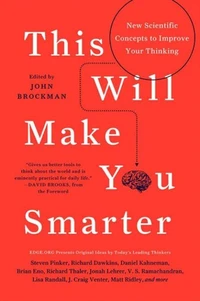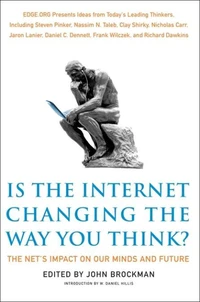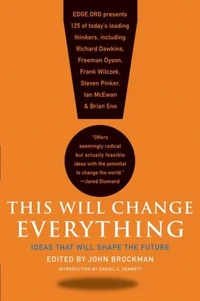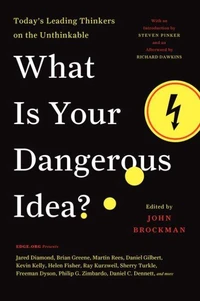
The publisher of the online science salon Edge.org, John Brockman is the editor of Know This, This Idea Must Die, This Explains Everything, This Will Make You Smarter, and other volumes.
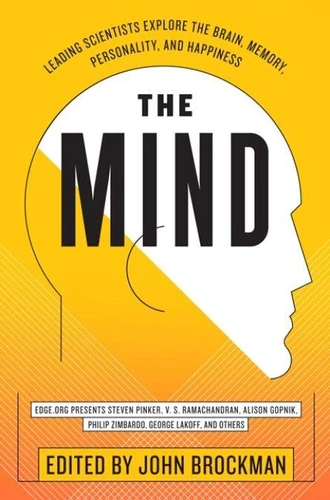
The Mind. Leading Scientists Explore the Brain, Memory, Personality, and Happiness
Par :Formats :
Disponible dans votre compte client Decitre ou Furet du Nord dès validation de votre commande. Le format ePub protégé est :
- Compatible avec une lecture sur My Vivlio (smartphone, tablette, ordinateur)
- Compatible avec une lecture sur liseuses Vivlio
- Pour les liseuses autres que Vivlio, vous devez utiliser le logiciel Adobe Digital Edition. Non compatible avec la lecture sur les liseuses Kindle, Remarkable et Sony
- Non compatible avec un achat hors France métropolitaine
 , qui est-ce ?
Notre partenaire de plateforme de lecture numérique où vous retrouverez l'ensemble de vos ebooks gratuitement
Pour en savoir plus sur nos ebooks, consultez notre aide en ligne ici
C'est si simple ! Lisez votre ebook avec l'app Vivlio sur votre tablette, mobile ou ordinateur :

- FormatePub
- ISBN978-0-06-210156-3
- EAN9780062101563
- Date de parution16/08/2011
- Protection num.Adobe DRM
- Infos supplémentairesepub
- ÉditeurHarper Perennial
Résumé
"Theway Brockman interlaces essays about research on the frontiers of science withones on artistic vision, education, psychology and economics is sure to buzzany brain." -Chicago Sun-Times on This WillChange EverythingMarkingthe debut of a hard-hitting new series from Edge.org and Harper Perennial, editor John Brockman delivers a cutting-edge master class covering everythingyou need to know about The Mind.
With original contributions by theworld's leading thinkers and scientists, including Steven Pinker, George Lakoff, Philip Zimbardo, V. S. Ramachandran, and others, The Mind offers aconsciousness-expanding primer on a fundamental topic. Unparalleled in scope, depth, insight and quality, Edge.org's The Mind isnot to be missed. From the frontiers of cognitive science and evolutionary psychology, leading thinkers explore: The Brain as Computer: Steven Pinker argues that the human mind is not a blank slate but a complex system of computational organs designed by natural selection.
Emotions and Memory: Neuroscientist Joseph LeDoux reveals how emotional memories are formed in parallel to conscious ones, exploring the brain circuits that underlie fear and anxiety. Mirror Neurons and Self-Awareness: V. S. Ramachandran explains how 'monkey-see-monkey-do' neurons may be the key to empathy, imitation, and our ability to understand the minds of others-and our own. The Science of Happiness: Martin Seligman, a founder of positive psychology, distinguishes between the pleasant life, the good life, and the meaningful life, offering a scientific framework for eudaemonia.
Moral Psychology: Why are we so passionate about right and wrong? Jonathan Haidt explores the evolutionary roots of morality, religion, and the intuitions that bind us into groups.
With original contributions by theworld's leading thinkers and scientists, including Steven Pinker, George Lakoff, Philip Zimbardo, V. S. Ramachandran, and others, The Mind offers aconsciousness-expanding primer on a fundamental topic. Unparalleled in scope, depth, insight and quality, Edge.org's The Mind isnot to be missed. From the frontiers of cognitive science and evolutionary psychology, leading thinkers explore: The Brain as Computer: Steven Pinker argues that the human mind is not a blank slate but a complex system of computational organs designed by natural selection.
Emotions and Memory: Neuroscientist Joseph LeDoux reveals how emotional memories are formed in parallel to conscious ones, exploring the brain circuits that underlie fear and anxiety. Mirror Neurons and Self-Awareness: V. S. Ramachandran explains how 'monkey-see-monkey-do' neurons may be the key to empathy, imitation, and our ability to understand the minds of others-and our own. The Science of Happiness: Martin Seligman, a founder of positive psychology, distinguishes between the pleasant life, the good life, and the meaningful life, offering a scientific framework for eudaemonia.
Moral Psychology: Why are we so passionate about right and wrong? Jonathan Haidt explores the evolutionary roots of morality, religion, and the intuitions that bind us into groups.
A propos de John Brockman
11,46 €

4,99 €


9,49 €