
Nouveauté
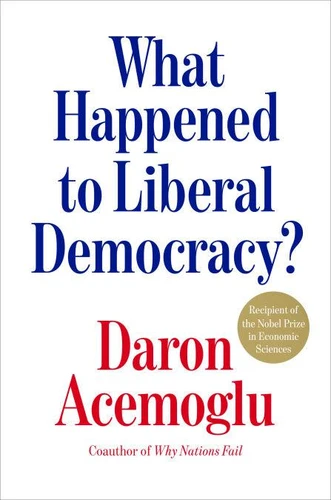
What Happened to Liberal Democracy?. Remaking a Politics of Shared Prosperity
Par :Formats :
Disponible dans votre compte client Decitre ou Furet du Nord dès validation de votre commande. Le format ePub protégé est :
- Compatible avec une lecture sur My Vivlio (smartphone, tablette, ordinateur)
- Compatible avec une lecture sur liseuses Vivlio
- Pour les liseuses autres que Vivlio, vous devez utiliser le logiciel Adobe Digital Edition. Non compatible avec la lecture sur les liseuses Kindle, Remarkable et Sony
- Non compatible avec un achat hors France métropolitaine
 , qui est-ce ?
Notre partenaire de plateforme de lecture numérique où vous retrouverez l'ensemble de vos ebooks gratuitement
Pour en savoir plus sur nos ebooks, consultez notre aide en ligne ici
C'est si simple ! Lisez votre ebook avec l'app Vivlio sur votre tablette, mobile ou ordinateur :

- Nombre de pages416
- FormatePub
- ISBN8217182183
- EAN9798217182183
- Date de parution11/08/2026
- Protection num.Adobe DRM
- Taille3 Mo
- Infos supplémentairesepub
- ÉditeurDutton
Résumé
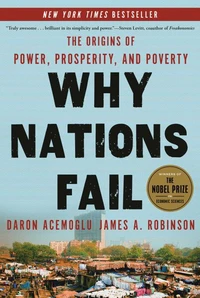
From Daron Acemoglu, 2024 Nobel laureate in economics and coauthor of Why Nations Fail, an ambitious and expansive inquiry into the biggest story in global politics over the last hundred years: the rise and fall of liberal democracy."A very important work and a must-read." -Thomas Piketty, #1 New York Times bestselling author of Capital in the Twenty-First Century"Daron Acemoglu is one of the most brilliant and insightful thinkers I've ever known.
His particular genius is being able to look at impossibly complex problems and see right to the heart of what matters. This book is a tour de force that left me feeling more optimistic about the future than I have in a long time." -Steven Levitt, #1 New York Times bestselling author of FreakonomicsThe dissolution of the Soviet Union in 1991 raised hopes that we were one step closer to the triumph of liberalism.
Soon, many predicted, we would all be living in functional liberal democracies. Sustained economic growth would benefit all segments of society and war would be a relic of the past. A generation later, one can only ask: What happened?Nobel laureate Daron Acemoglu argues in this powerful book that liberal democracy flourished when it pursued its core promises of shared prosperity, democratic governance, and the free pursuit of knowledge.
But liberalism, a philosophy built to challenge power, never fully adjusted to becoming the establishment. Nor was it able to deal with the economic and social disruptions that digital technologies wrought. Worse, in the postindustrial economy, liberalism turned its back on its core promises. As a segment of college-educated elites became politically dominant and separated from the rest of society, they sowed the seeds of widespread inequality while intensifying efforts to reshape mass culture and values.
Acemoglu, using the interdisciplinary lens that has won him acclaim, documents the extraordinary, unparalleled progress that liberalism created, and recounts how liberal democratic institutions plunged themselves into crisis over the last several decades. Looking at rapid advances in technology, shifts in regulatory environments, global political history, and economics, Acemoglu lucidly lays out the successes and failures of our most important political system.
And he envisions a new way forward, which he calls working-class liberalism: a philosophy that prioritizes shared prosperity, empowers communities, and accommodates a range of values and views.
His particular genius is being able to look at impossibly complex problems and see right to the heart of what matters. This book is a tour de force that left me feeling more optimistic about the future than I have in a long time." -Steven Levitt, #1 New York Times bestselling author of FreakonomicsThe dissolution of the Soviet Union in 1991 raised hopes that we were one step closer to the triumph of liberalism.
Soon, many predicted, we would all be living in functional liberal democracies. Sustained economic growth would benefit all segments of society and war would be a relic of the past. A generation later, one can only ask: What happened?Nobel laureate Daron Acemoglu argues in this powerful book that liberal democracy flourished when it pursued its core promises of shared prosperity, democratic governance, and the free pursuit of knowledge.
But liberalism, a philosophy built to challenge power, never fully adjusted to becoming the establishment. Nor was it able to deal with the economic and social disruptions that digital technologies wrought. Worse, in the postindustrial economy, liberalism turned its back on its core promises. As a segment of college-educated elites became politically dominant and separated from the rest of society, they sowed the seeds of widespread inequality while intensifying efforts to reshape mass culture and values.
Acemoglu, using the interdisciplinary lens that has won him acclaim, documents the extraordinary, unparalleled progress that liberalism created, and recounts how liberal democratic institutions plunged themselves into crisis over the last several decades. Looking at rapid advances in technology, shifts in regulatory environments, global political history, and economics, Acemoglu lucidly lays out the successes and failures of our most important political system.
And he envisions a new way forward, which he calls working-class liberalism: a philosophy that prioritizes shared prosperity, empowers communities, and accommodates a range of values and views.
A propos de Daron Acemoglu
31,00 €
45,00 €

Macroéconomie
Grand Format
49,00 €
Microéconomie
2e édition
2e édition
Grand Format
59,00 €

What happened to liberal democracy
Grand Format
23,00 €