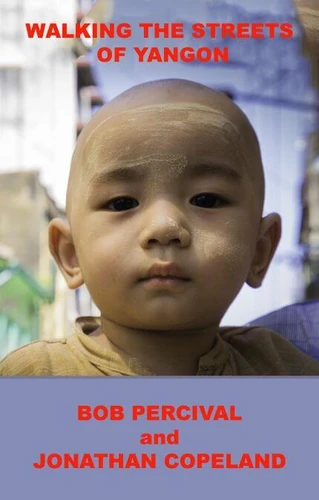
WALKING THE STREETS OF YANGON, The people, stories and hidden treasures of downtown cosmopolitan Yangon (Rangoon)
Par :Formats :
Disponible dans votre compte client Decitre ou Furet du Nord dès validation de votre commande. Le format ePub est :
- Compatible avec une lecture sur My Vivlio (smartphone, tablette, ordinateur)
- Compatible avec une lecture sur liseuses Vivlio
- Pour les liseuses autres que Vivlio, vous devez utiliser le logiciel Adobe Digital Edition. Non compatible avec la lecture sur les liseuses Kindle, Remarkable et Sony
 , qui est-ce ?
Notre partenaire de plateforme de lecture numérique où vous retrouverez l'ensemble de vos ebooks gratuitement
Pour en savoir plus sur nos ebooks, consultez notre aide en ligne ici
C'est si simple ! Lisez votre ebook avec l'app Vivlio sur votre tablette, mobile ou ordinateur :

- FormatePub
- ISBN978-1-370-60867-6
- EAN9781370608676
- Date de parution24/08/2017
- Protection num.pas de protection
- Infos supplémentairesepub
- ÉditeurEditeurs divers USA
Résumé
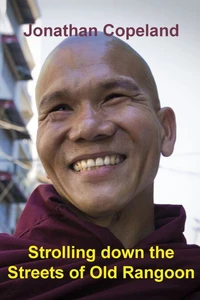
This book is a guide to walking the downtown streets of Yangon. Here are the stories of the streets and the people that live in them. This book is also about the love of walking, of discovering the rhythms, streetscapes and hidden treasures of individual streets. Yangon is a tough city, full of hardworking, pragmatic and generous people. It is a city of street vendors, fortune-tellers, teashops, colonial buildings, bookstalls, mosques, temples, modern shops, street markets, endless teashops, beer stations and a thousand eating-places.
This book is meant to be a reflection of Yangon's deep cultural, political, and personal diversity. Every street holds its own unique character. Behind every door and inside every shop is a person whose story is a joy to listen to. Please dive into the hustle and bustle of downtown Yangon and share this journey. The first section 'Streets of Yangon' is a close examination of a number of streets in the north-south grid of downtown Yangon.
Downtown was the 'old' section of the city, which was rebuilt in the 1850s according to the imagination and ambitions of the colonial British. Hundreds of small pagodas were ransacked and demolished, small hillocks leveled, monasteries relocated, waterways drained, with the whole area being raised an additional four feet to combat flooding. This required millions of cubic feet of soil to be brought down from the north of the city.
The city grid was planned to have major roads running east-west and narrow streets running north-south. The narrow streets would provide shade during the intensely hot Rangoon days, and also act as a breezeway, with air flowing up from the Rangoon River towards Shwedagon Pagoda. In the biggest migration of the early nineteenth century, Indian labourers were brought in to Burma by the colonial British to build the new city of Rangoon.
From 1900 to 1930, Rangoon was a city with a majority Indian population, and to a much lesser extent, Chinese. It was a city controlled by the British, with the Burmese residents marginalised and expelled to the city's outskirts. Rangoon was one of Asia's richest and most metropolitan cities, populated with Chinese, Jewish and Armenian traders and business people. It is this cosmopolitan history that makes the streets so interesting to walk through.
Take your time to soak in what is happening around you - the buildings, the people, the food, the goods, and the stories. The second section of the book 'Local products, Local people' examines specific services and the people that provide them. It is a history of the diversity and rich culture of what Yangon is, and could be - its past, present and future. It is about local people and the products they make and sell.
The third section 'Impressions of Rangoon' is a series of writings that examine a particular day in the life of a well-known writer who lived in or visited Rangoon (Yangon). It is an imagined journey but as true to that writer's experience as is possible through research and investigation. It is a realistic impression. The fourth section 'Odds and Ends' is further experiences of people and place in Yangon.
I hope you enjoy this book. It is a book to be used - to be put in your back pocket or backpack, and pulled out again, over and over again, as you walk the streets of this wonderful downtown area of the city. The photos are visual evidence of this cultural richness, and clues to the real treasures that are contained within each street. Enjoy the adventure of walking the streets of Yangon!
This book is meant to be a reflection of Yangon's deep cultural, political, and personal diversity. Every street holds its own unique character. Behind every door and inside every shop is a person whose story is a joy to listen to. Please dive into the hustle and bustle of downtown Yangon and share this journey. The first section 'Streets of Yangon' is a close examination of a number of streets in the north-south grid of downtown Yangon.
Downtown was the 'old' section of the city, which was rebuilt in the 1850s according to the imagination and ambitions of the colonial British. Hundreds of small pagodas were ransacked and demolished, small hillocks leveled, monasteries relocated, waterways drained, with the whole area being raised an additional four feet to combat flooding. This required millions of cubic feet of soil to be brought down from the north of the city.
The city grid was planned to have major roads running east-west and narrow streets running north-south. The narrow streets would provide shade during the intensely hot Rangoon days, and also act as a breezeway, with air flowing up from the Rangoon River towards Shwedagon Pagoda. In the biggest migration of the early nineteenth century, Indian labourers were brought in to Burma by the colonial British to build the new city of Rangoon.
From 1900 to 1930, Rangoon was a city with a majority Indian population, and to a much lesser extent, Chinese. It was a city controlled by the British, with the Burmese residents marginalised and expelled to the city's outskirts. Rangoon was one of Asia's richest and most metropolitan cities, populated with Chinese, Jewish and Armenian traders and business people. It is this cosmopolitan history that makes the streets so interesting to walk through.
Take your time to soak in what is happening around you - the buildings, the people, the food, the goods, and the stories. The second section of the book 'Local products, Local people' examines specific services and the people that provide them. It is a history of the diversity and rich culture of what Yangon is, and could be - its past, present and future. It is about local people and the products they make and sell.
The third section 'Impressions of Rangoon' is a series of writings that examine a particular day in the life of a well-known writer who lived in or visited Rangoon (Yangon). It is an imagined journey but as true to that writer's experience as is possible through research and investigation. It is a realistic impression. The fourth section 'Odds and Ends' is further experiences of people and place in Yangon.
I hope you enjoy this book. It is a book to be used - to be put in your back pocket or backpack, and pulled out again, over and over again, as you walk the streets of this wonderful downtown area of the city. The photos are visual evidence of this cultural richness, and clues to the real treasures that are contained within each street. Enjoy the adventure of walking the streets of Yangon!
A propos de Jonathan Copeland
5,99 €

9,49 €