An archivist who uncovered trade secrets from dusty records, weaving self-help on adaptive thinking, business lessons from ancient commerce, and detailed histories of global trade evolutions.
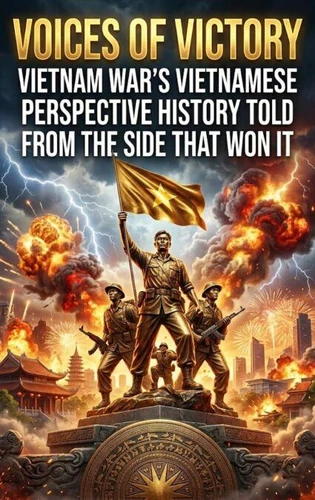
Voices of Victory. Vietnam War's Vietnamese Perspective History Told From the Side That Won It
Par :Formats :
Disponible dans votre compte client Decitre ou Furet du Nord dès validation de votre commande. Le format ePub est :
- Compatible avec une lecture sur My Vivlio (smartphone, tablette, ordinateur)
- Compatible avec une lecture sur liseuses Vivlio
- Pour les liseuses autres que Vivlio, vous devez utiliser le logiciel Adobe Digital Edition. Non compatible avec la lecture sur les liseuses Kindle, Remarkable et Sony
 , qui est-ce ?
Notre partenaire de plateforme de lecture numérique où vous retrouverez l'ensemble de vos ebooks gratuitement
Pour en savoir plus sur nos ebooks, consultez notre aide en ligne ici
C'est si simple ! Lisez votre ebook avec l'app Vivlio sur votre tablette, mobile ou ordinateur :

- Nombre de pages178
- FormatePub
- ISBN978-3-565-46078-6
- EAN9783565460786
- Date de parution26/05/2026
- Protection num.pas de protection
- Taille2 Mo
- Infos supplémentairesepub
- ÉditeurEmphaloz Publishing House
Résumé
This book uncovers how triumph felt from the other side, where a global conflict became a national liberation etched in rice fields and mountain passes. It confronts the divide between Western defeat narratives and Vietnamese endurance, asking what shifts when history flows from those who held the land against empire. Three currents define this viewpoint: revolutionary continuity that linked anti-colonial resistance across generations, from Dien Bien Phu to the final offensive; civilian mobilization where villages became strategic cores, weaving logistics and morale into everyday life; and postwar synthesis where victory memory integrates sacrifice, foreign intervention, and state-building without triumphalism.
Hanoi's archives and oral testimonies reveal not just military calculus but cultural resilience, land ethics, and the weight of unification. German and European audiences find here a counter-lens to familiar accounts, illuminating how memory aligns with sovereignty in postcolonial Europe's own reflections.
Hanoi's archives and oral testimonies reveal not just military calculus but cultural resilience, land ethics, and the weight of unification. German and European audiences find here a counter-lens to familiar accounts, illuminating how memory aligns with sovereignty in postcolonial Europe's own reflections.
A propos de Dahlia Ives






9,99 €