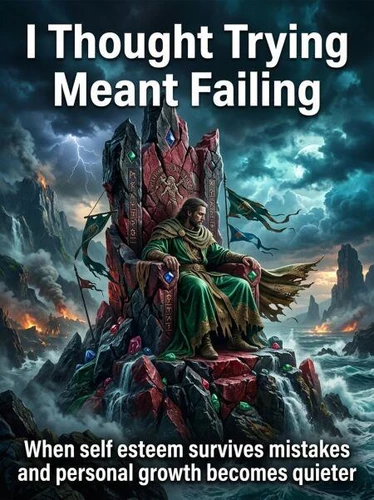
I Thought Trying Meant Failing. When self esteem survives mistakes and personal growth becomes quieter
Par :Formats :
Disponible dans votre compte client Decitre ou Furet du Nord dès validation de votre commande. Le format ePub est :
- Compatible avec une lecture sur My Vivlio (smartphone, tablette, ordinateur)
- Compatible avec une lecture sur liseuses Vivlio
- Pour les liseuses autres que Vivlio, vous devez utiliser le logiciel Adobe Digital Edition. Non compatible avec la lecture sur les liseuses Kindle, Remarkable et Sony
 , qui est-ce ?
Notre partenaire de plateforme de lecture numérique où vous retrouverez l'ensemble de vos ebooks gratuitement
Pour en savoir plus sur nos ebooks, consultez notre aide en ligne ici
C'est si simple ! Lisez votre ebook avec l'app Vivlio sur votre tablette, mobile ou ordinateur :

- Nombre de pages177
- FormatePub
- ISBN978-3-565-48825-4
- EAN9783565488254
- Date de parution09/06/2026
- Protection num.pas de protection
- Taille1023 Ko
- Infos supplémentairesepub
- ÉditeurEmphaloz Publishing House
Résumé
It is exhausting to treat every mistake like evidence.
This warm, grounded book is for readers who quietly measure themselves against outcomes and feel ashamed when learning takes longer than expected. It explores self esteem, growth mindset, fear of failure, and the hidden pressure to appear naturally capable.
Inside, the focus is not on becoming endlessly productive or perfectly positive. It is on noticing how a fixed mindset can turn effort into embarrassment, feedback into threat, and comparison into proof that everyone else is further ahead.
With gentle psychological clarity, it reframes mistakes as part of learning without pretending they stop hurting. For anyone tired of performing competence, this book makes room for a slower kind of confidence-one that grows through practice, patience, and a less punishing relationship with progress. Eventually, trying may stop feeling like exposure and start feeling like honest contact with life.
With gentle psychological clarity, it reframes mistakes as part of learning without pretending they stop hurting. For anyone tired of performing competence, this book makes room for a slower kind of confidence-one that grows through practice, patience, and a less punishing relationship with progress. Eventually, trying may stop feeling like exposure and start feeling like honest contact with life.
A propos de Dahlia Ives



9,99 €