Zoe Anderson is an English-language nonfiction author known for writing sharp, accessible books on modern society, technology, psychology, and cultural transformation. Her work combines clear analysis with engaging storytelling, helping readers navigate complex ideas without losing the human perspective behind them. Zoe often explores how everyday habits, digital systems, and shifting social values quietly reshape the way people think, work, and connect in the modern world.
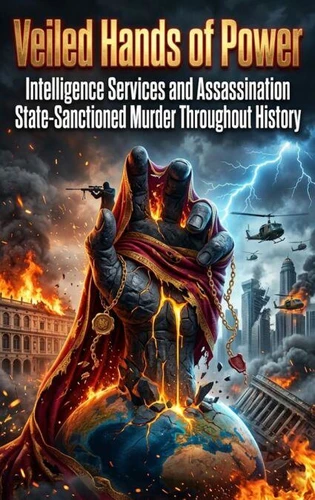
Veiled Hands of Power. Intelligence Services and Assassination State-Sanctioned Murder Throughout History
Par :Formats :
Disponible dans votre compte client Decitre ou Furet du Nord dès validation de votre commande. Le format ePub est :
- Compatible avec une lecture sur My Vivlio (smartphone, tablette, ordinateur)
- Compatible avec une lecture sur liseuses Vivlio
- Pour les liseuses autres que Vivlio, vous devez utiliser le logiciel Adobe Digital Edition. Non compatible avec la lecture sur les liseuses Kindle, Remarkable et Sony
 , qui est-ce ?
Notre partenaire de plateforme de lecture numérique où vous retrouverez l'ensemble de vos ebooks gratuitement
Pour en savoir plus sur nos ebooks, consultez notre aide en ligne ici
C'est si simple ! Lisez votre ebook avec l'app Vivlio sur votre tablette, mobile ou ordinateur :

- Nombre de pages219
- FormatePub
- ISBN978-3-565-45542-3
- EAN9783565455423
- Date de parution23/05/2026
- Protection num.pas de protection
- Taille2 Mo
- Infos supplémentairesepub
- ÉditeurEmphaloz Publishing House
Résumé
This book examines how hidden instruments of state power carry out sanctioned killings, tracing the lingering erosion of trust that follows when violence is justified in the name of national security. It explores how covert operations leave behind not only victims, but also fractured public memory, competing narratives, and enduring suspicion toward institutions meant to protect society.
The work focuses on three interconnected mechanisms that transform covert killing into lasting historical memory.
First, deniable weapons such as the KGB's cyanide spray gun or concealed poison devices enabled assassinations to resemble accidents or suicides, creating ambiguity that shielded perpetrators while fostering public doubt. Cases involving Lev Rebet and Stepan Bandera illustrate how unresolved uncertainty can outlive the events themselves, producing competing interpretations between official accounts and public suspicion. Second, bureaucratic layering within intelligence systems masks extraordinary violence behind procedural routines and national security language.
Discussions surrounding the death of Patrice Lumumba demonstrate how responsibility can become diffused across institutions, making morally consequential acts appear administratively distant. Third, technological distancing through drone warfare transforms killing into a remote bureaucratic process while simultaneously generating digital evidence, leaked documents, and whistleblower testimony that rehumanize victims and challenge sanitized narratives.
These dynamics reveal how state violence can become normalized through routine systems while leaving documentary traces that continue to shape public debate, historical accountability, and collective memory long after the operations themselves have ended.
First, deniable weapons such as the KGB's cyanide spray gun or concealed poison devices enabled assassinations to resemble accidents or suicides, creating ambiguity that shielded perpetrators while fostering public doubt. Cases involving Lev Rebet and Stepan Bandera illustrate how unresolved uncertainty can outlive the events themselves, producing competing interpretations between official accounts and public suspicion. Second, bureaucratic layering within intelligence systems masks extraordinary violence behind procedural routines and national security language.
Discussions surrounding the death of Patrice Lumumba demonstrate how responsibility can become diffused across institutions, making morally consequential acts appear administratively distant. Third, technological distancing through drone warfare transforms killing into a remote bureaucratic process while simultaneously generating digital evidence, leaked documents, and whistleblower testimony that rehumanize victims and challenge sanitized narratives.
These dynamics reveal how state violence can become normalized through routine systems while leaving documentary traces that continue to shape public debate, historical accountability, and collective memory long after the operations themselves have ended.